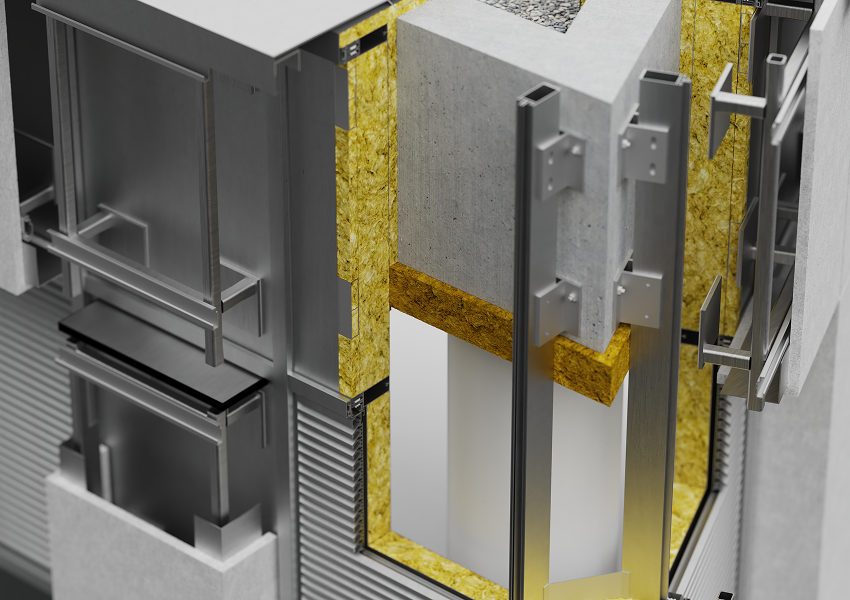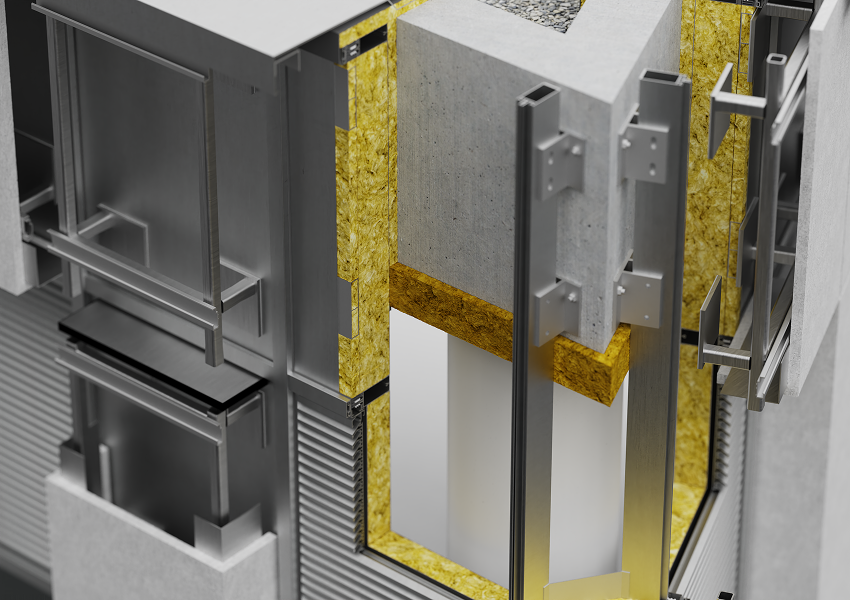
MC024-3.1 Thermal performance characteristics, moisture-related characteristics, key materials used in facade systems, and how to select material parameters for calculation purposes
Why the Answer Is Only as Good as the Values You Choose — A Complete Framework for Material Properties and Calculation Parameters
About This CPD
Join us for a foundational technical CPD on material properties and calculation parameters. This session opens with something that should worry you a little: two engineers are handed the exact same detail — same drawing, same geometry, same method. They each run it, and they get different answers. One of them simply typed in a different value for the insulation.
Presented by Eugene Korch (IAST), this course teaches the quiet, unglamorous skill that every later calculation in this course depends on: knowing what materials actually do, and choosing the right numbers to describe them.
This course covers:
Why materials decide the result — how one changed material value can move a calculated answer, and why every material enters a calculation through just two properties
Thermal and moisture characteristics of materials — conductivity and resistance, the awkward cases that need care, the vapour resistance factor, and when wetting actually enters a calculation
Key materials used in façade systems — insulation, structural and backing materials, boards and sheathings, membranes, glazing, and sealants, each read through the same two properties
Selecting parameters for calculation — ranking data sources by reliability, declared versus design values, choosing the unfavourable end of a range, and handling non-uniform layers
Using one unsettling fact throughout — a single material value can change the calculated answer — this CPD gives you a practical, defensible way to choose the numbers every calculation in this course depends on.
What You'll Learn
Explain why two engineers can run the exact same calculation on the same drawing and get different answers, and why that risk lives entirely in the material values chosen
Distinguish a material's two properties in building physics — thermal conductivity and vapour resistance — and explain why heat is the primary property and vapour is reserved for the condensation check
Explain why thermal conductivity is a fixed material property, while thickness turns it into a layer's thermal resistance, and describe why resistances stack
Identify the three awkward heat-loss cases that need special care: air gaps, surface resistances, and a high-conductivity element bridging an insulation layer
Explain the vapour resistance factor and its equivalent air thickness, and describe the parallel between the heat and moisture properties of a material
Explain why the dry, declared conductivity value is used in almost every calculation, and identify the one genuine exception where a wet, in-use value applies
Apply the "tight on the warm side, open on the cold side" rule as a materials decision, and explain why getting a membrane on the wrong side builds a moisture trap
Describe the thermal and moisture character of the key material families used in façade systems: insulation, structural and backing materials, boards and sheathings, membranes, glazing, and sealants
Rank material data sources by reliability — a manufacturer's declared data, standard tables, and software defaults — and explain why the most specific source available should always be used
Distinguish a declared value from a design value, and explain why the design value, adjusted for real in-service conditions, is the honest one to calculate with
Apply the rule for choosing the unfavourable end of a material's property range, depending on whether the calculation is for heat loss or for condensation risk
Recognise when a layer is a mixture of materials rather than a single one, and explain why it must be described with a combined, equivalent value rather than the insulation's value alone
Explain why recording the source of every material value used in a calculation is essential, and what that discipline protects against on a real project
Who Should Attend
Architects, Architectural Technologists, Junior Façade Engineers, Envelope Designers, Façade Specialist Contractors, Building Envelope Consultants, Project Managers, and Design Managers.
This session is designed for anyone choosing or reviewing material property values for a façade calculation, and assumes only the earlier fundamentals courses as prior knowledge.
Speakers

Eugene Korch
Programme Director, IASTEugene is a façade engineer and educator who leads educational initiatives through the Institute for Architectural Science and Technology (IAST) and Facade Intelligence, delivering training to construction professionals.
Course Schedule
Format: Online
CPD Points: 2 hours structured CPD / 2 Learning Units
Certificate: CPD certificate provided upon completion
MC024-3.1
Thermal performance characteristics, moisture-related characteristics, key materials used in facade systems, and how to select material parameters for calculation purposes
Why the Answer Is Only as Good as the Values You Choose — A Complete Framework for Material Properties and Calculation Parameters
Course Fee £120
Free for FI Pro Members