
Upcoming Events
At Façade Intelligence, powered by the Institute for Architectural Science and Technology (IAST), we host a range of live webinars, specialist seminars, and CPD-accredited short course launches.
Our events bring together leading experts in façade design, engineering, and building science, offering practical insights, technical knowledge, and opportunities for interactive learning.
Stay tuned for our next sessions and join us to keep your skills at the forefront of the industry.

Surface Condensation Risk Assessment

Surface Condensation Risk Assessment
From Selecting the Junction to a Compliant Report — A Complete Practical Framework for Surface Condensation and Mould Risk Analysis
About This CPD
Join us for a hands-on technical CPD on surface condensation and mould risk analysis. This session takes one real junction — a window reveal, where frame meets wall — and builds the complete workflow from scratch: from choosing which locations to check to a report that will hold up to scrutiny from a reviewing authority.
Presented by Eugene Korch (IAST), this seminar draws a hard line between a heat-loss model and a condensation-risk model, and is honest about the single most common calculation mistake in this kind of work — a sign error that can silently invalidate an otherwise perfect result.
This session covers:
Selecting locations for condensation analysis — why a condensation-risk model is a standalone engineering artefact, and how a national thermal bridge map helps you find every junction worth checking
The temperature factor f_Rsi — the physical meaning of a dimensionless scale that describes a junction’s geometry, independent of the weather outside
Boundary conditions and model setup — switching a thermal model into its conservative, pessimistic mode for a condensation check, and why the internal surface resistance value changes
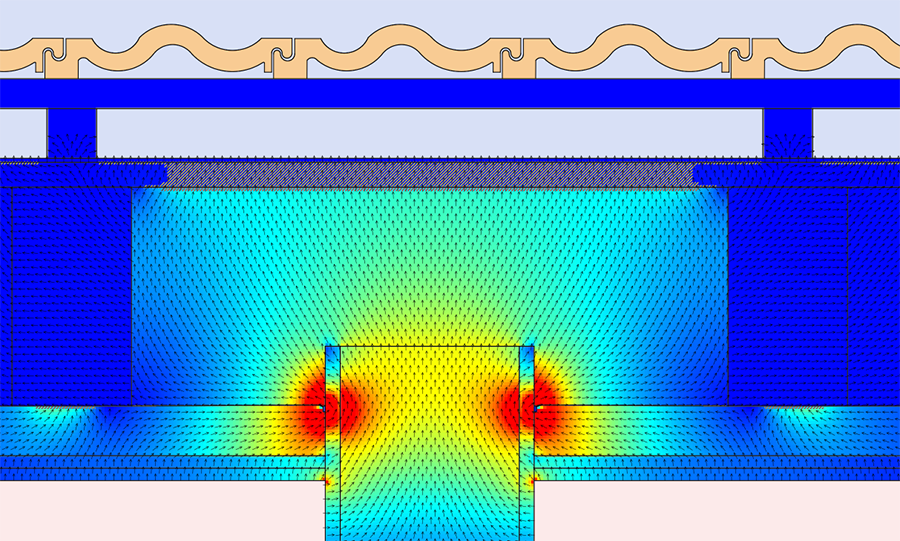
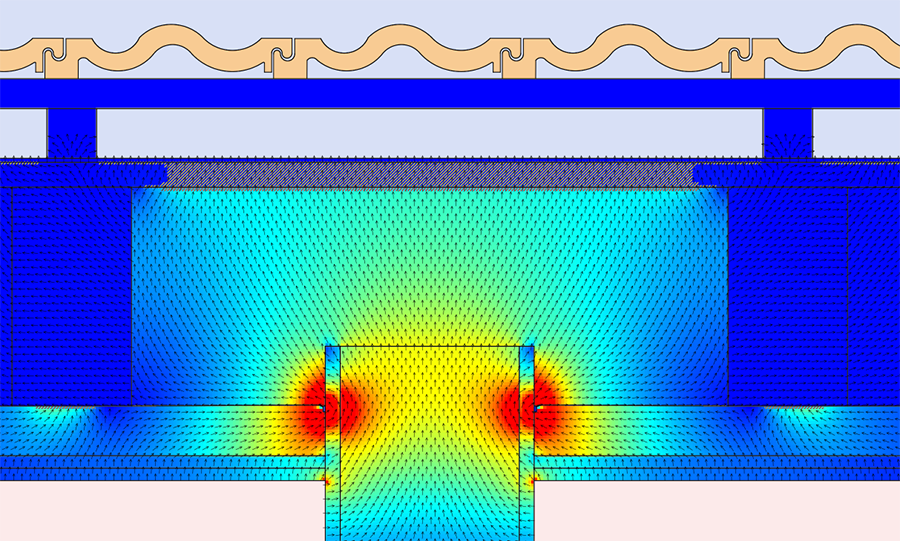
Visual isotherm analysis — reading the dew point and mould lines across the finish layer, the waterproofing line, and any installation cavities
Mathematical analysis and precise f_Rsi calculation — finding the coldest point with the right tool, and calculating the result by hand without falling into the sign-error trap
Optimising a non-compliant junction — the levers that actually move the temperature factor, and proving the fix works with a full recalculation
Producing the official engineering report — what a defensible condensation risk report must contain, and why vague language will not survive review
Common mistakes and 2D method limitations — the errors that hide in plain sight, and exactly where a flat two-dimensional model stops being enough
Using one real worked example from start to finish, this CPD focuses on practical judgement — not just how to get a number, but how to know when to trust it.
What You'll Learn
Distinguish the objective of a surface condensation risk assessment from an overall heat-loss (U-value) calculation, and recognise why the same model cannot serve both
Select which junctions on a real facade fragment need a dedicated condensation check, using a national thermal bridge map to identify likely locations
Understand the physics of the dew point and explain why the mould growth threshold, not the dew point, is the correct design criterion
Explain the physical meaning of the temperature factor (f_Rsi) as a dimensionless, climate-independent property of a junction's geometry
Set up a condensation-risk model correctly in a thermal modelling programme, including the conservative internal surface resistance convention and why it differs from the standard heat-loss value
Read a temperature field using the visual isotherm method, checking the finish layer, the waterproofing line, and any air cavities around a window
Use insulation and drainage measures correctly to resolve a critical isotherm passing through an installation cavity, without creating a new interstitial risk
Use both the manual Temperature Tool and the automatic Min./Max. Temperature Tool to find the coldest point on a junction, and know why the second is more reliable
Calculate the temperature factor (f_Rsi) correctly by hand, avoiding the sign error that is the most common mistake in this kind of work
Compare a calculated f_Rsi against the applicable normative threshold, and optimise a non-compliant junction using insulation geometry and material choice
Recognise the two-dimensional model’s real limitation at complex three-dimensional junctions, and know when to add a safety margin or run a full 3D analysis
Produce a defensible condensation risk report containing every climate parameter, screenshot, and compliance verdict a reviewing authority requires
Recognise the most common invisible errors in this kind of work — the wrong surface resistance, a sign error, a manually guessed critical point, and an unsupported compliance claim
Who Should Attend
Architects, Architectural Technologists, Envelope Designers, Façade Specialist Contractors, Façade Engineers, Junior Façade Engineers, Building Envelope Consultants, Thermal Modelling Specialists, Project Managers, and Design Managers.
This session is designed for design professionals who need to build, run, or review a surface condensation risk calculation for a real project — where the consequences of getting it wrong are not just a visual defect, but a recognised health risk and a legal exposure for the project author.
Speakers
Eugene Korch
Programme Director, IAST
Eugene is a façade engineer and educator who leads educational initiatives through the Institute for Architectural Science and Technology (IAST) and Facade Intelligence, delivering CPD training to construction professionals.
Event Details
Format: Live online seminar with interactive polls and a live model walkthrough
Duration: 60 minutes + Q&A
Date: 19 November 2026
CPD Points: 2 hours structured CPD / 2 Learning Units
Certificate: CPD certificate provided upon completion
Recording: Available on demand to members only
Join the Façade Intelligence Professional Membership (FI PRO) to access a comprehensive library of seminar recordings, a wide range of short courses developed by the Institute for Architectural Science and Technology (IAST), and regular case study releases.
We guarantee our members a minimum of 24 hours of structured, high-quality CPD content each year, allowing professionals to continuously develop their expertise in façade design and engineering.
FI PRO Membership provides individuals and teams with the flexibility to explore a wide variety of specialist courses without any additional course fees.
Individual Membership
Join FI PRO today to start accessing our full CPD library.
Corporate Membership
For organisations looking to support the development of their teams, explore our Corporate Membership options or contact us at corporate@iast.uk.
All technical CPD courses developed by the Institute for Architectural Science and Technology are free from advertising and commercial bias and are designed to promote best practices in façade design and engineering.
By joining FI PRO, you not only provide your team with engaging, relevant professional development opportunities, but also help support the continued development of the Façade Intelligence Knowledge Platform, contributing to higher standards of professional education across the construction industry.
Structural Logic of Façade Systems: A Comparative Guide
Structural Logic of Façade Systems: A Comparative Guide
The Structural Hierarchy, Load Path, and Critical Element of Every Common Façade System — From Stick Curtain Wall to Cable Nets
Registration will open soon. Join the Facade Intelligence Professional Membership (FI PRO) to receive priority access to this seminar.
About This CPD
Join us for a practical technical CPD on the structural logic of facade systems. Every facade transfers load from its outer surface to the building structure, but the chain of elements doing the work is different in every system — and so is the critical calculation. This session walks through every common system and shows what the elements are, how they connect, and which one carries the greatest responsibility.
Presented by Eugene Korch (IAST), this webinar covers stick and unitised curtain walls, rainscreen cladding, precast panels, masonry cladding, double-skin facades, point-fixed and cable-supported glazing, and louvres and balustrades — and closes with a comparative summary table designed to be kept and used on real projects.
This session covers:
The universal load path principle — panel, intermediate elements, connection — and the three functional categories present in every system
Stick curtain wall — the mullion as the primary element, what every component is checked for, and the structural silicone joint
Unitised curtain wall — spigot and interlock arrangements, sustained load on factory-bonded silicone, and the panel joint as the defining challenge
Rainscreen cladding — the short load path, panel materials from stone to composite, and the fire lessons
Precast concrete panels — reinforced concrete design, handling loads, and why the crane lift can govern
Masonry cladding — shelf angles, wall ties, movement joints, and the deflection limit that protects the brickwork
Double-skin facades — how cavity ventilation splits the wind between the skins
Point-fixed glazing, glass fins, cable nets and cable trusses — what is calculated and when to bring in a specialist
Louvres, brise-soleil, and balustrades — infill modules, cantilevered fins, fatigue, and barrier checks
The comparative summary table — every system, its load path, and its critical calculation in one reference
Using clear diagrams and real system variants, this CPD focuses on the practical question behind every facade calculation: which element carries the greatest responsibility in this system, and what must it be checked for?
What You'll Learn
Identify the structural hierarchy of any common facade system
Name every element in the load path from panel to structure and state what each is checked for
Point to the critical element of each system: mullion, panel joint, shelf angle, handling case, pre-tension
Distinguish determinate from indeterminate load paths and understand the cost of each model
Recognise where standard facade engineering ends and specialist territory begins
Read the structural logic of a facade directly from its section
Who Should Attend
Architects, Architectural Technologists, Envelope Designers, Facade Specialist Contractors, Junior Facade Engineers, Building Envelope Consultants, Structural Engineers, Developers, Project Managers, Building Control Officers, Regulators, Cost Consultants, and Design Managers.
This session is designed for design professionals working on residential, commercial, and mixed-use developments where the facade system choice determines the engineering scope, the cost, and the risk of the building envelope.
Speakers
Eugene Korch
Programme Director, IAST
Eugene is a facade engineer and educator who leads educational initiatives through the Institute for Architectural Science and Technology (IAST) and Facade Intelligence, delivering training to construction professionals.
Event Details
Format: Live online webinar with interactive polls
Duration: 1 hour
Date: 10 December 2026
Time: 4:00 PM – 5:00 PM (GMT)
CPD Points: 1.5 hours structured CPD / 1 Learning Unit
Certificate: CPD certificate provided upon completion the course
Recording: Available on demand to members only
Join the Façade Intelligence Professional Membership (FI PRO) to access a comprehensive library of seminar recordings, a wide range of short courses developed by the Institute for Architectural Science and Technology (IAST), and regular case study releases.
We guarantee our members a minimum of 24 hours of structured, high-quality CPD content each year, allowing professionals to continuously develop their expertise in façade design and engineering.
FI PRO Membership provides individuals and teams with the flexibility to explore a wide variety of specialist courses without any additional course fees.
Individual Membership
Join FI PRO today to start accessing our full CPD library.
Corporate Membership
For organisations looking to support the development of their teams, explore our Corporate Membership options or contact us at corporate@iast.uk.
All technical CPD courses developed by the Institute for Architectural Science and Technology are free from advertising and commercial bias and are designed to promote best practices in façade design and engineering.
By joining FI PRO, you not only provide your team with engaging, relevant professional development opportunities, but also help support the continued development of the Façade Intelligence Knowledge Platform, contributing to higher standards of professional education across the construction industry.
Interstitial Condensation in Façades: The Glaser Method
Interstitial Condensation in Facades: The Glaser Method
From Layer Stack to a Defensible Report — A Complete Practical Framework for Interstitial Condensation (Glaser Method) Analysis
Registration will open soon. Join the Facade Intelligence Professional Membership (FI PRO) to receive priority access to this seminar.
About This CPD
Join us for a hands-on technical CPD on interstitial condensation and the Glaser method. This session takes one real wall — a light-steel-frame construction with a brick-slip rainscreen — and builds the complete moisture calculation chain from scratch: from defining the assembly to a report you can hand to a client and defend.
Presented by Eugene Korch (IAST) and [CO-PRESENTER NAME TBC], this webinar follows the same wall from a clean failure — no working vapour-control layer — through to a verified pass, and is honest about the silent errors that make a condensation report wrong while it still looks completely right.
This session covers:
Why condensation forms inside walls — the difference between surface and interstitial condensation, and why a steady-state check is the right first tool for finding hidden moisture before it forms on site
Defining the assembly — why every layer counts for moisture, including the thin membranes a heat-loss calculation safely ignores
Vapour diffusion properties — the vapour resistance factor and the equivalent air-layer thickness that puts every material on one comparable scale
Building the layer stack — inside-to-out order in the programme, the single most common data-entry error, and how to handle steel studs and a ventilated cavity
Boundary conditions and climate data — twelve months of temperature and humidity, the element-type setting, the humidity class, and the return-period adjustment
Running the analysis and reading the moisture table — checking both the surface and interstitial results, and the pass/fail rule: drying must be at least equal to build-up
Reading the Glaser diagram — the saturation curve, the actual vapour pressure line, the safety margin, and the exact condensing interface
Fixing the failing assembly — three genuine routes to a pass, and the engineering trade-offs between them
Reporting and common errors — what a defensible report must contain, and the invisible mistakes that hide in plain sight
Using one real worked example from start to finish, this CPD focuses on practical judgement — not just how to get a number, but how to know when to trust it.
What You'll Learn
Distinguish interstitial condensation from surface condensation, and explain why a steady-state Glaser check is the right first tool for finding hidden moisture on the drawing before it forms on site
List every layer of a real wall build-up for a moisture calculation, including the thin membranes and control layers that are safely ignored in a heat-loss calculation
Source and select vapour resistance factor values correctly, choosing the conservative end of a material’s range rather than the value that flatters the result
Build a layer stack correctly inside a thermal modelling programme, in true inside-to-out order, entering thicknesses in metres and catching the single most common data-entry error
Handle the two special cases every real wall presents: a mixed stud-and-insulation layer treated as a uniform equivalent for moisture, and a ventilated cavity that ends the calculation before the outer cladding
Set up twelve months of climate data correctly, including the element-type setting, the humidity class, and the return-period adjustment — and know when that adjustment reverses in a warm or dry climate
Run a condensation-risk calculation from an existing heat-loss model without rebuilding it, and read both the surface and interstitial results before trusting either one
Read a moisture table and a Glaser diagram to identify the exact condensing interface, the size of the safety margin, and whether a wall dries out fully every summer
Apply the pass/fail rule correctly: that a wall may get damp in winter, but must dry out at least as much as it wets up, checked across both seasons
Choose and apply the right fix for a failing assembly — a vapour-control layer, a more vapour-open board, or added insulation — and understand the engineering trade-offs between them
Read a thermal modelling programme’s own condensation report critically, and assemble a complete, reproducible report of your own with every source, climate setting, and diagram it requires
Recognise the most common invisible errors in interstitial condensation work — a library default left unchanged, the wrong element type, an optimistic material value, a membrane on the wrong side, and a bracket cold spot the method cannot see
Recognise the genuine limits of the steady-state Glaser method, and know when a result is marginal enough to call for dynamic hygrothermal simulation instead
Who Should Attend
Architects, Architectural Technologists, Envelope Designers, Façade Specialist Contractors, Façade Engineers, Junior Façade Engineers, Building Envelope Consultants, Building Physics Consultants, Project Managers, and Design Managers.
This session is designed for design professionals who need to build, run, or review an interstitial condensation calculation for a real project — particularly those working with modern multi-layer wall build-ups where hidden moisture risk is easy to miss.
Speakers
Eugene Korch
Programme Director, IAST
Eugene is a façade engineer and educator who leads educational initiatives through the Institute for Architectural Science and Technology (IAST) and Facade Intelligence, delivering CPD training to construction professionals.
Event Details
Format: Live online seminarwith interactive polls and a live model walkthrough
Duration: 60 minutes + Q&A
Date: 21.01.2027
CPD Points: 2 hours structured CPD / 2 Learning Units
Certificate: CPD certificate provided upon completion
Recording: Available on demand to members only
Join the Façade Intelligence Professional Membership (FI PRO) to access a comprehensive library of seminar recordings, a wide range of short courses developed by the Institute for Architectural Science and Technology (IAST), and regular case study releases.
We guarantee our members a minimum of 24 hours of structured, high-quality CPD content each year, allowing professionals to continuously develop their expertise in façade design and engineering.
FI PRO Membership provides individuals and teams with the flexibility to explore a wide variety of specialist courses without any additional course fees.
Individual Membership
Join FI PRO today to start accessing our full CPD library.
Corporate Membership
For organisations looking to support the development of their teams, explore our Corporate Membership options or contact us at corporate@iast.uk.
All technical CPD courses developed by the Institute for Architectural Science and Technology are free from advertising and commercial bias and are designed to promote best practices in façade design and engineering.
By joining FI PRO, you not only provide your team with engaging, relevant professional development opportunities, but also help support the continued development of the Façade Intelligence Knowledge Platform, contributing to higher standards of professional education across the construction industry.

Glazing Specification for Façades: A Parameter-Based Selection Guide

Glazing Specification for Façades: A Parameter-Based Selection Guide
Registration will open soon. Join the Facade Intelligence Professional Membership (FI PRO) to receive priority access to this seminar.
About This CPD
An insulating glass unit is defined by dozens of parameters, and changing any one of them affects the others. This course provides architects and building design professionals with practical knowledge of IGU specification and selection, covering glass type and thickness, cavity width and gas fill, low-emissivity coatings, solar control coatings, acoustic interlayers, and the implications of each choice on thermal, solar, acoustic, and visual performance.
You’ll learn to read and interpret IGU performance data – centre-of-pane U-value, g-value, light transmittance, and weighted sound reduction index – and understand the trade-offs between competing requirements. The course demonstrates how to select an IGU that simultaneously meets thermal targets, overheating limits, acoustic requirements, and the aesthetic expectations of the design team.
Presented by Eugene Korch (façade engineer and IAST Programme Director), the course uses real manufacturer data and product comparison tables to demonstrate how apparently similar glass specifications deliver very different performance outcomes – and how specification language must be precise enough to prevent substitution.
Combining IGU performance comparison matrices with specification writing guidance, this course helps you choose the right IGU for each application, protect performance intent in your specifications, and evaluate contractor-proposed alternatives during value engineering.
Join the Façade Intelligence Professional Membership (FI PRO) to access a comprehensive library of seminar recordings, a wide range of short courses developed by the Institute for Architectural Science and Technology (IAST), and regular case study releases.
We guarantee our members a minimum of 24 hours of structured, high-quality CPD content each year, allowing professionals to continuously develop their expertise in façade design and engineering.
FI PRO Membership provides individuals and teams with the flexibility to explore a wide variety of specialist courses without any additional course fees.
Individual Membership
Join FI PRO today to start accessing our full CPD library.
Corporate Membership
For organisations looking to support the development of their teams, explore our Corporate Membership options or contact us at corporate@iast.uk.
All technical CPD courses developed by the Institute for Architectural Science and Technology are free from advertising and commercial bias and are designed to promote best practices in façade design and engineering.
By joining FI PRO, you not only provide your team with engaging, relevant professional development opportunities, but also help support the continued development of the Façade Intelligence Knowledge Platform, contributing to higher standards of professional education across the construction industry.

Thermal Performance of Curtain Wall Façades: Calculation and Compliance

Thermal Performance of Curtain Wall Façades: Calculation and Compliance
From Fragment Selection to a Defensible Report — A Complete Practical Framework for Curtain Wall Thermal Calculation and Compliance
About This CPD
Join us for a hands-on technical CPD on curtain wall thermal calculation. This session takes one real stick curtain wall — thermally broken aluminium mullions and transoms, double glazing, and spandrel panels running both vertically and horizontally — and builds the complete calculation chain from scratch: from choosing a method to a wall U-value you can hand to a client and defend.
Presented by Eugene Korch (IAST), this webinar shows both standard curtain wall calculation methods side by side, and exactly how a repeating façade lets a flat cross-section stand in for the whole run — no full three-dimensional model needed for the typical joint.
This session covers:
How the curtain wall U-value is built up — bar values, centre-of-glass and spandrel panel U-values, and the linear thermal bridge at every joint, weighted into one wall U-value (Ucw)
Choosing the calculation method — the single assessment method (Utj) versus the component assessment method (ψtj) — two routes to the same answer, and when each one suits the job
Selecting the calculation fragment — the three cutting rules that keep a repeating cross-section representative: safe cut lines, both infill types, and the correct depth boundary
Collecting input data — the four groups every calculation needs: standards, geometry, material conductivities, and boundary conditions
Importing the DXF and preparing the model — cleaning a manufacturer's cross-section: corner radii, small holes, and the open line segments that break an import
Assigning materials — every closed region given its material, including the hollow aluminium chambers, the pressure-plate screw, and the glazing edge spacer
Setting boundary conditions — working surfaces for each method, and why internal corners are always the coldest, most condensation-prone spot
Verifying the model and running the calculation — catching the errors the software never flags, then confirming a result with the three post-calculation checks
Building up Ucw and checking compliance — the length- and area-weighted assembly table, and finding the dominant contributor when a wall fails to comply
Producing the report and avoiding common errors — what a defensible calculation must contain, and the invisible mistakes that hide in fragment selection and model preparation
Using one real worked example from start to finish, this CPD focuses on practical judgement — not just how to get a number, but how to know when to trust it.
What You'll Learn
Recognise why a curtain wall's repeating bar-and-glass geometry can be represented by a single 2D cross-section rather than a full 3D model
Understand how a curtain wall's overall U-value (Ucw) is built up from bar values, centre-of-glass and spandrel panel U-values, and the linear bridge at every joint
Distinguish between the single assessment method (Utj) and the component assessment method (ψtj), and choose the one that fits a given project
Select a repeating calculation fragment correctly, applying the three cutting rules: safe cut lines, both infill types, and the correct depth boundary
Assemble the four groups of input data a curtain wall calculation needs: standards, geometry, material conductivities, and boundary conditions
Prepare a manufacturer's DXF cross-section for import, cleaning the radii, small holes, and open line segments that would otherwise break the model
Assign materials correctly to every closed region, including the hollow aluminium chambers, the pressure-plate screw, and the glazing edge spacer
Set correct boundary conditions for a curtain wall cross-section, and understand why internal corners are always the coldest, most condensation-prone points
Verify a curtain wall model before calculating, catching the errors the software itself never flags
Run a calculation with either method, confirm it has converged and passed the three post-calculation checks, and read a plausible cross-section U-value
Build the length- and area-weighted assembly table that turns individual cross-section results into a single curtain wall U-value (Ucw)
Check a curtain wall's U-value against the applicable regional energy code, and identify which component to improve first when it fails
Produce a defensible calculation report containing every input, image, and result another engineer would need to reproduce your answer
Recognise the most common invisible errors in curtain wall thermal calculation — in fragment selection, DXF preparation, and results reading — and know where to look for each one
Who Should Attend
Architects, Architectural Technologists, Envelope Designers, Façade Specialist Contractors, Façade Engineers, Junior Façade Engineers, Building Envelope Consultants, Thermal Modelling Specialists, Project Managers, and Design Managers.
This session is designed for design professionals who need to build, run, or review a curtain wall thermal calculation for a real project — particularly those working across multiple markets with different regulatory frameworks.
Speakers
Eugene Korch
Programme Director, IAST
Eugene is a façade engineer and educator who leads educational initiatives through the Institute for Architectural Science and Technology (IAST) and Facade Intelligence, delivering CPD training to construction professionals.
Event Details
Format: Live online workshop-style webinar with interactive polls and a live model walkthrough
Duration: 120 minutes + Q&A
Date: 22 October
CPD Points: 2 hours structured CPD / 2 Learning Units
Certificate: CPD certificate provided upon completion
Recording: Available on demand to members only
Join the Façade Intelligence Professional Membership (FI PRO) to access a comprehensive library of seminar recordings, a wide range of short courses developed by the Institute for Architectural Science and Technology (IAST), and regular case study releases.
We guarantee our members a minimum of 24 hours of structured, high-quality CPD content each year, allowing professionals to continuously develop their expertise in façade design and engineering.
FI PRO Membership provides individuals and teams with the flexibility to explore a wide variety of specialist courses without any additional course fees.
Individual Membership
Join FI PRO today to start accessing our full CPD library.
Corporate Membership
For organisations looking to support the development of their teams, explore our Corporate Membership options or contact us at corporate@iast.uk.
All technical CPD courses developed by the Institute for Architectural Science and Technology are free from advertising and commercial bias and are designed to promote best practices in façade design and engineering.
By joining FI PRO, you not only provide your team with engaging, relevant professional development opportunities, but also help support the continued development of the Façade Intelligence Knowledge Platform, contributing to higher standards of professional education across the construction industry.

Corporate Membership with IAST - Briefing & Q&A

Corporate Membership with IAST - Briefing & Q&A
Learn how Corporate Membership with the Institute for Architectural Science and Technology (IAST) gives your team 30+ hours of structured technical education in façade design and engineering each year, a growing library of courses and case studies, and a clear path to professional certification — all backed by Façade Intelligence's technical resources.
Join us for a live session with prospective members to explore our resources and see how corporate membership builds technical capability, supports SKEB (Skills, Knowledge, Experience and Behaviour) goals under the Building Safety Act and competence statements, and strengthens collaboration and learning culture across your teams.
This session is for anyone with a stake in building envelope design, control, compliance and remediation — façade engineering consultancies, contractors, manufacturers, developers, technical architects, public sector teams, and beyond. We'll show you how membership delivers value at every level, from individual professionals to L&D teams and senior leadership.
What we'll cover
CPD and technical resources: 30+ hours of structured CPD annually, technical reviews, case studies, and a full library of 3D technical details and documentation.
Professional development pathways: short courses and structured learning routes, including the Diploma in Façade Design and Engineering, Certificate in Façade Design, and Certificate in Façade Cost Planning and Estimating — plus how these support individual competence statements and progress toward MIAST (Member of the Institute for Architectural Science and Technology) status.
Membership logistics: how to apply, what to expect once your team joins, tiered corporate pricing, member discounts, and access to exclusive technical events and industry insights.
We'll close with a live Q&A with the IAST team.
Who should attend
Façade professionals looking to bring this training to their teams; technical leaders and managers; HR and L&D professionals; and business leaders responsible for team development and capability building.
Register
Please register with your company email address — this lets us confirm your organisation and send you the most relevant details for your team.
Can't make this date? Email admin@iast.uk and we'll find the next available slot.
Thu, 8 Oct 2026 12:00 - 13:00 (UTC+00:00) Dublin, Edinburgh, Lisbon, London
We look forward to seeing you there.
Join the Façade Intelligence Professional Membership (FI PRO) to access a comprehensive library of seminar recordings, a wide range of short courses developed by the Institute for Architectural Science and Technology (IAST), and regular case study releases.
We guarantee our members a minimum of 24 hours of structured, high-quality CPD content each year, allowing professionals to continuously develop their expertise in façade design and engineering.
FI PRO Membership provides individuals and teams with the flexibility to explore a wide variety of specialist courses without any additional course fees.
Individual Membership
Join FI PRO today to start accessing our full CPD library.
Corporate Membership
For organisations looking to support the development of their teams, explore our Corporate Membership options or contact us at corporate@iast.uk.
All technical CPD courses developed by the Institute for Architectural Science and Technology are free from advertising and commercial bias and are designed to promote best practices in façade design and engineering.
By joining FI PRO, you not only provide your team with engaging, relevant professional development opportunities, but also help support the continued development of the Façade Intelligence Knowledge Platform, contributing to higher standards of professional education across the construction industry.
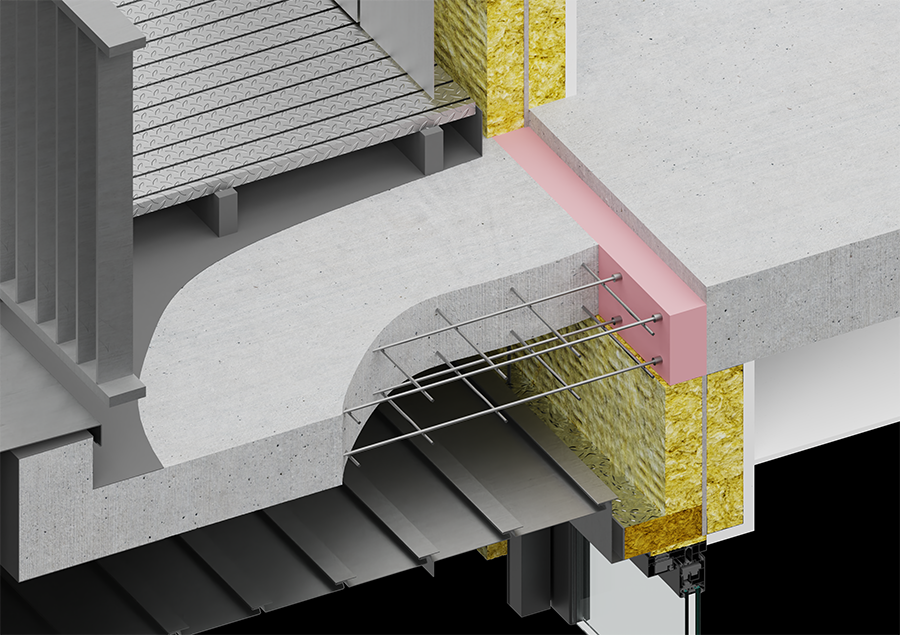
Thermal Bridging in Façade Systems: Point, Linear and FEA-Based U-Value Analysis
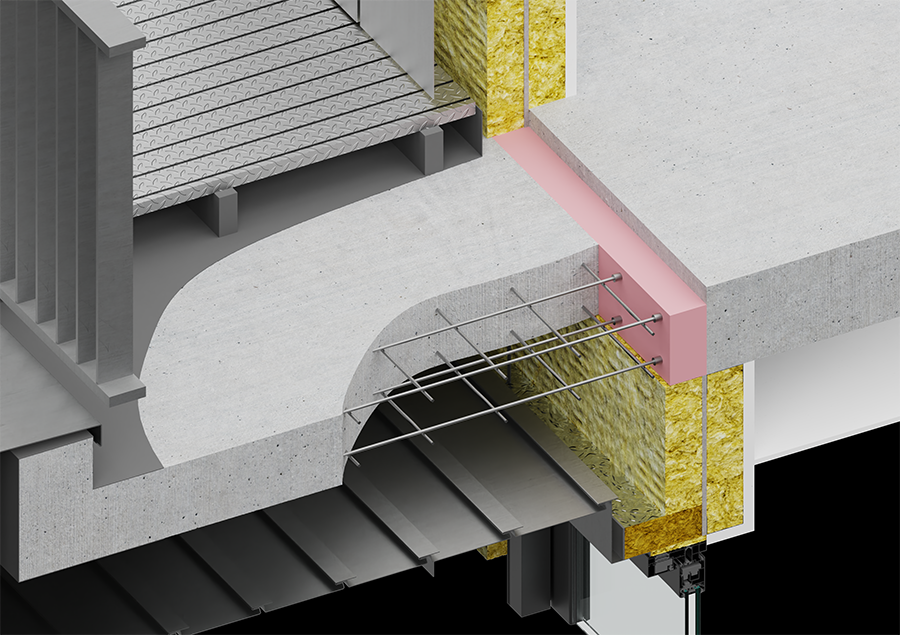
Thermal Bridging in Façade Systems: Point, Linear and FEA-Based U-Value Analysis
From Fragment Selection to a Verified Report — A Complete Practical Framework for 3D Facade Thermal Bridge Modelling
About This CPD
Join us for a hands-on technical CPD on 3D thermal bridge modelling for facade fixings. This session takes one real facade — a solid wall with a light steel framing zone and a concrete-backed zone, both fixed with brackets through the insulation — and builds the complete calculation chain from scratch: from choosing the fragment to a report you can hand to a client and defend.
Presented by Eugene Korch (IAST), this seminar shows exactly when simplified, layer-by-layer calculation stops being enough — and how to run a 3D thermal model so the result can be trusted, not just produced.
This session covers:
Why 3D analysis is needed — why a bracket or stud crossing the insulation creates a three-dimensional heat-loss picture that a simple layer calculation cannot see, and when the applicable standard recommends or requires 3D modelling
Selecting the calculation fragment — why we calculate a repeating piece rather than the whole facade, the line-of-symmetry rule, and why zones with different constructions each need their own fragment
Collecting input data — the three groups of data every model needs: drawings and geometry, thermal conductivity values, and boundary conditions — and where to source each
Building the 3D model in CAD — one element, one body, one material; how to simplify real bracket and fixing geometry without losing what controls the heat result
Importing and setting up the programme — blocks, overlap order, material assignment by colour, and the coarse-grid error that makes a thin bracket disappear
Boundary conditions — setting the warm and cold sides correctly, and why the side faces of a fragment are left untouched
Verification — why the programme never warns you when something is wrong, and the checks that catch it before you calculate
Running the calculation and reading results — confirming convergence, the three checks that separate a trustworthy result from one that only looks trustworthy, and reading the system U-value against the base U-value
Producing the report — what a defensible calculation report must contain, so another engineer can reproduce your result
Common errors — the invisible mistakes that hide in fragment selection, model set-up, and results reading, and exactly how to catch each one
Using one real worked example from start to finish, this CPD focuses on practical judgement — not just how to get a number, but how to know when to trust it.
What You'll Learn
Recognise when a facade junction or fixing requires 3D thermal modelling, and when a simplified layer calculation is still sufficient
Select a repeating calculation fragment correctly, applying the line-of-symmetry rule and capturing every bracket type present
Identify why zones with different constructions — light steel framing and concrete backup, for example — must be modelled and calculated separately
Assemble the three groups of input data a 3D thermal model needs before any software is opened: geometry, material properties, and boundary conditions
Build a simplified but faithful 3D model of a facade fragment in CAD, keeping every element — insulation, bracket, stud, thermal break, fixing — as its own separate body
Export a CAD model correctly for import into a thermal modelling programme, avoiding the unit and geometry errors that cause a silent, wrong result
Assign materials by colour, set a calculation grid fine enough to keep thin metal elements from disappearing, and prepare a model ready to calculate
Set correct boundary conditions for a steady-state heat-loss calculation, including where a ventilated cavity’s outer boundary belongs
Verify a 3D thermal model before calculating, catching the fragment, model set-up, and boundary errors that never trigger a warning
Run a 3D calculation, confirm it has converged, and apply the three checks that separate a trustworthy result from one that only looks trustworthy
Read and interpret temperature-field and heat-flow images, and compare a facade's system U-value against its base U-value to isolate the thermal cost of the fixing system
Produce a defensible calculation report containing every input, image, and result another engineer would need to reproduce your answer
Recognise the most common invisible errors in 3D facade thermal modelling, and know exactly where to look for each one
Who Should Attend
Architects, Architectural Technologists, Envelope Designers, Façade Specialist Contractors, Façade Engineers, Junior Façade Engineers, Building Envelope Consultants, Thermal Modelling Specialists, Project Managers, and Design Managers.
This session is designed for design professionals who need to build, run, or review a 3D thermal bridge calculation for a real facade fixing system — particularly those working across multiple markets with different regulatory frameworks.
Speakers
Eugene Korch
Programme Director, IAST
Eugene is a façade engineer and educator who leads educational initiatives through the Institute for Architectural Science and Technology (IAST) and Facade Intelligence, delivering CPD training to construction professionals.
Event Details
Format: Live online webinar with interactive polls and a live model walkthrough
Duration: 60 minutes + Q&A
Date: 10 September 2026
CPD Points: 1.5 hours structured CPD / 1 Learning Unit
Certificate: CPD certificate provided upon completion
Recording: Available on demand to members only
Join the Façade Intelligence Professional Membership (FI PRO) to access a comprehensive library of seminar recordings, a wide range of short courses developed by the Institute for Architectural Science and Technology (IAST), and regular case study releases.
We guarantee our members a minimum of 24 hours of structured, high-quality CPD content each year, allowing professionals to continuously develop their expertise in façade design and engineering.
FI PRO Membership provides individuals and teams with the flexibility to explore a wide variety of specialist courses without any additional course fees.
Individual Membership
Join FI PRO today to start accessing our full CPD library.
Corporate Membership
For organisations looking to support the development of their teams, explore our Corporate Membership options or contact us at corporate@iast.uk.
All technical CPD courses developed by the Institute for Architectural Science and Technology are free from advertising and commercial bias and are designed to promote best practices in façade design and engineering.
By joining FI PRO, you not only provide your team with engaging, relevant professional development opportunities, but also help support the continued development of the Façade Intelligence Knowledge Platform, contributing to higher standards of professional education across the construction industry.

Engineering the Envelope: Structural Load Assessment for Façades

Engineering the Envelope: Structural Load Assessment for Façades
Identifying, Quantifying, and Combining Every Load That Acts on a Façade — From Self-Weight and Wind to Impact, Thermal, Seismic, and Maintenance Loads
About This CPD
Join us for a practical technical CPD on structural load assessment for façades. This session gives architects and building design professionals a complete map of the loads and environmental actions acting on a façade — the starting point of every façade calculation, because every bracket, mullion, and glass check traces back to a load.
Presented by Eugene Korch (IAST), this webinar uses worked examples and real project situations to show how the most commonly missed loads — internal pressure during construction, funnelling, snow drift, maintenance point loads, ponding — lead to undersized brackets, broken glass, and failed fixings, and how to catch them early.
This session covers:
Façade types — non-load-bearing, self-supporting, and load-bearing systems, and why the distinction matters for who designs what
Dead load — load paths by system, material weights, the glass thickness rule of thumb, and the errors that leave brackets undersized
Wind load — pressure zones, corner suction, internal pressure and the sign convention, funnelling, dominant openings during construction, and when wind tunnel studies are needed
Barrier and crowd loads — the three independent checks of BS 6180, the 1100 mm line load, vertical loads, and crowd loading on terraces
Impact — soft body, hard body, and pendulum classification testing, and which test applies where
Thermal effects — surface temperature versus air temperature, differential movement, and the sealed glass unit as the one genuine thermal load
Seismic drift, snow and drift zones, ice, ponding — the environmental loads that are easy to miss
Maintenance and construction loads — cradles, rope access, point loads, and the half-built façade in wind
Load combinations — ultimate versus serviceability, combination coefficients, and worked examples
Load application — tributary areas, bracket eccentricity, and the complete project checklist
Using worked examples and clear diagrams, this CPD focuses on the practical question behind every façade calculation: which loads act on this project, what is their worst combination, and have we designed for it?
What You'll Learn
Identify every load type that can act on a façade and confirm which apply on a given project
Trace dead load paths and avoid the most frequent weight-calculation errors
Understand where wind loads peak on a building and combine external and internal pressure with the correct signs
Apply the three barrier checks and the vertical load correctly
Know which impact test applies to the installed element and which to the glass product
Recognise the sealed glass unit as a genuine thermal load and everything else as movement to accommodate
Assess snow drift, ice, ponding, and maintenance loads before they are missed
Distinguish ultimate from serviceability checks and apply combination coefficients
Who Should Attend
Architects, Architectural Technologists, Envelope Designers, Façade Specialist Contractors, Junior Façade Engineers, Building Envelope Consultants, Structural Engineers, Developers, Project Managers, Building Control Officers, Regulators, Cost Consultants, and Design Managers.
This session is designed for design professionals working on residential, commercial, and mixed-use developments where correct load assessment determines the safety and cost of the building envelope.
Speakers
Eugene Korch
Programme Director, IAST
Eugene is a façade engineer and educator who leads educational initiatives through the Institute for Architectural Science and Technology (IAST) and Facade Intelligence, delivering training to construction professionals.
Event Details
Format: Live online webinar with interactive polls
Duration: 1 hour
Date: 13 August 2026
Time: 4:00 PM – 5:00 PM (BST)
CPD Points: 2 hours structured CPD / 2 Learning Units
Certificate: CPD certificate provided upon completion
Recording: Available on demand to members only
Join the Façade Intelligence Professional Membership (FI PRO) to access a comprehensive library of seminar recordings, a wide range of short courses developed by the Institute for Architectural Science and Technology (IAST), and regular case study releases.
We guarantee our members a minimum of 24 hours of structured, high-quality CPD content each year, allowing professionals to continuously develop their expertise in façade design and engineering.
FI PRO Membership provides individuals and teams with the flexibility to explore a wide variety of specialist courses without any additional course fees.
Individual Membership
Join FI PRO today to start accessing our full CPD library.
Corporate Membership
For organisations looking to support the development of their teams, explore our Corporate Membership options or contact us at corporate@iast.uk.
All technical CPD courses developed by the Institute for Architectural Science and Technology are free from advertising and commercial bias and are designed to promote best practices in façade design and engineering.
By joining FI PRO, you not only provide your team with engaging, relevant professional development opportunities, but also help support the continued development of the Façade Intelligence Knowledge Platform, contributing to higher standards of professional education across the construction industry.

Corporate Membership with IAST - Briefing & Q&A

Corporate Membership with IAST - Briefing & Q&A
Learn how Corporate Membership with the Institute for Architectural Science and Technology (IAST) gives your team 30+ hours of structured technical education in façade design and engineering each year, a growing library of courses and case studies, and a clear path to professional certification — all backed by Façade Intelligence's technical resources.
Join us for a live session with prospective members to explore our resources and see how corporate membership builds technical capability, supports SKEB (Skills, Knowledge, Experience and Behaviour) goals under the Building Safety Act and competence statements, and strengthens collaboration and learning culture across your teams.
This session is for anyone with a stake in building envelope design, control, compliance and remediation — façade engineering consultancies, contractors, manufacturers, developers, technical architects, public sector teams, and beyond. We'll show you how membership delivers value at every level, from individual professionals to L&D teams and senior leadership.
What we'll cover
CPD and technical resources: 30+ hours of structured CPD annually, technical reviews, case studies, and a full library of 3D technical details and documentation.
Professional development pathways: short courses and structured learning routes, including the Diploma in Façade Design and Engineering, Certificate in Façade Design, and Certificate in Façade Cost Planning and Estimating — plus how these support individual competence statements and progress toward MIAST (Member of the Institute for Architectural Science and Technology) status.
Membership logistics: how to apply, what to expect once your team joins, tiered corporate pricing, member discounts, and access to exclusive technical events and industry insights.
We'll close with a live Q&A with the IAST team.
Who should attend
Façade professionals looking to bring this training to their teams; technical leaders and managers; HR and L&D professionals; and business leaders responsible for team development and capability building.
Register
Please register with your company email address — this lets us confirm your organisation and send you the most relevant details for your team.
Can't make this date? Email admin@iast.uk and we'll find the next available slot.
Thu, 6 Aug 2026 12:00 - 13:00 (UTC+00:00) Dublin, Edinburgh, Lisbon, London
We look forward to seeing you there.
Join the Façade Intelligence Professional Membership (FI PRO) to access a comprehensive library of seminar recordings, a wide range of short courses developed by the Institute for Architectural Science and Technology (IAST), and regular case study releases.
We guarantee our members a minimum of 24 hours of structured, high-quality CPD content each year, allowing professionals to continuously develop their expertise in façade design and engineering.
FI PRO Membership provides individuals and teams with the flexibility to explore a wide variety of specialist courses without any additional course fees.
Individual Membership
Join FI PRO today to start accessing our full CPD library.
Corporate Membership
For organisations looking to support the development of their teams, explore our Corporate Membership options or contact us at corporate@iast.uk.
All technical CPD courses developed by the Institute for Architectural Science and Technology are free from advertising and commercial bias and are designed to promote best practices in façade design and engineering.
By joining FI PRO, you not only provide your team with engaging, relevant professional development opportunities, but also help support the continued development of the Façade Intelligence Knowledge Platform, contributing to higher standards of professional education across the construction industry.
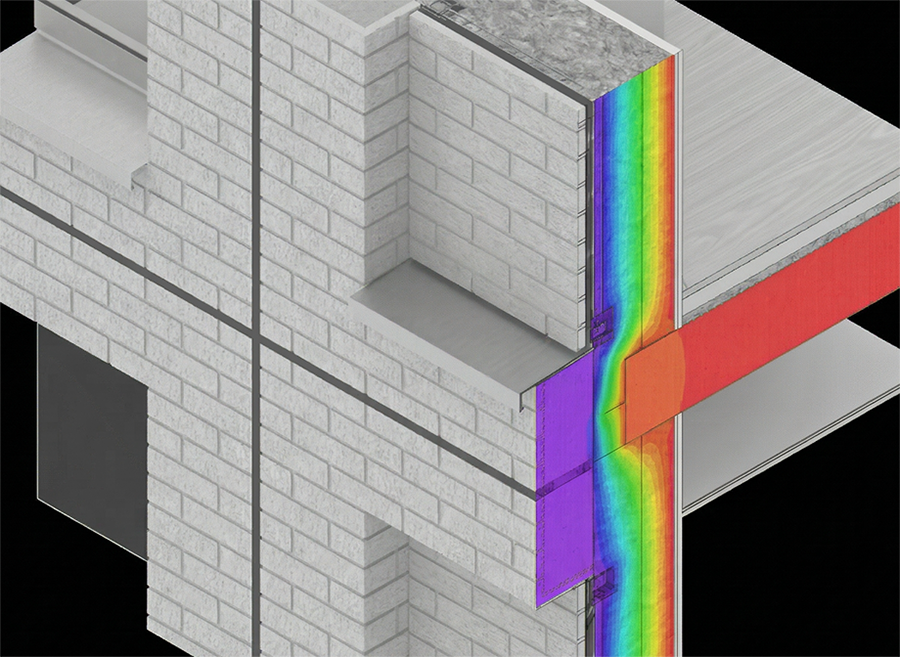
Thermal Analysis of Multi-Layered Walls: Calculation and Compliance
Thermal Analysis of Multi-Layered Walls: Calculation and Compliance
From Layer Terminology to Regulatory Documentation — A Complete Practical Framework
About This CPD
This course takes architects and building design professionals through the thermal transmittance calculation for multi-layered wall assemblies – step by step, layer by layer. It covers the principles of steady-state heat transfer, thermal resistance of individual layers, surface resistances, and the combined U-value methodology used in international and European practice.
You’ll learn to build up a U-value calculation from external surface resistance through cladding, ventilated cavities, insulation, structural elements, and internal finishes. The course addresses repeating thermal bridges such as metal brackets and rail systems, explains the upper and lower resistance method for inhomogeneous layers, and demonstrates when numerical modelling is required instead of simplified calculation.
Presented by Eugene Korch (façade engineer and IAST Programme Director), the course uses real wall build-ups from current projects to demonstrate how material selection, cavity ventilation, and bracket density affect the final U-value – and how small specification changes can push a wall assembly above or below regulatory compliance thresholds.
With step-by-step calculation worksheets and comparison tables, this course is designed to help you verify U-value calculations submitted by contractors and spot the common errors and optimistic assumptions before they become built problems.
This session covers:
Wall construction — layer sequence from internal finish to outer cladding, homogeneous vs non-homogeneous layers, thermal bridges in steel and timber frames
Key terminology — thermal conductivity (λ), thermal resistance (R), thermal transmittance (U), total thermal resistance (R-total): what each describes and why mixing them up breaks the calculation
Surface resistances — why Rsi and Rse exist, how direction of heat flow changes their values, and where they sit in the formula
Cavity classification — unventilated, slightly ventilated, and well-ventilated: how one classification decision shifts the entire thermal model
Thermal boundary — why in a rainscreen system it sits at the outer face of the insulation, not at the outer face of the building, and what that means for the cladding
Calculation methods — manual calculation, simple online calculators, and advanced professional tools: scope, limitations, and when to move from one to the next
Bracket correction — why a wall that passes the plane calculation may still fail once fixings are accounted for
Compliance — regulatory targets, safety margins, and the four levers for improving a non-compliant wall — in order of effectiveness
Documentation — what every regulatory calculation report must contain to allow independent verification
Built vs calculated performance — why the wall on site always performs worse than the wall in the calculation, and what the plane calculation cannot see
Using examples drawn from real construction types and international building codes, this CPD focuses on practical understanding. Not just how to get a number — but what the number means, whether to trust it, and how to document it.
What You'll Learn
Identify every layer in a multi-layered wall and explain its thermal function
Distinguish between thermal conductivity (λ), thermal resistance (R), and thermal transmittance (U) — and apply each correctly
Select the correct surface resistance values for walls, roofs, and floors
Classify an air cavity correctly and understand how that classification changes the calculation
Perform a manual U-value / R-total calculation for a homogeneous multi-layered wall
Use a simple online calculator accurately — and recognise when it is no longer appropriate
Use an advanced professional calculator for rainscreen facades with bracket correction
Identify the four levers for improving a non-compliant wall and apply them in the right order
Recognise why built performance always falls short of the calculated result, and how to design for it
Produce a calculation document that meets regulatory submission requirements
Who Should Attend
Architects, Architectural Technologists, Envelope Designers, Façade Specialist Contractors, Junior Façade Engineers, Building Envelope Consultants, Structural Engineers, Project Managers, Cost Consultants, and Design Managers.
This session is designed for design professionals who need to understand, produce, or review thermal calculations for external wall assemblies — particularly those working across multiple markets with different regulatory frameworks.
Speakers
Eugene Korch
Programme Director, IAST
Eugene is a façade engineer and educator who leads educational initiatives through the Institute for Architectural Science and Technology (IAST) and Facade Intelligence, delivering CPD training to construction professionals.
Event Details
Format: Live online webinar with interactive polls
Duration: 45 minutes + Q&A
Date: 16 July 2026
CPD Points: 1.5 hours structured CPD / 1 Learning Unit
Certificate: CPD certificate provided upon completion
Recording: Available on demand to members only
Join the Façade Intelligence Professional Membership (FI PRO) to access a comprehensive library of seminar recordings, a wide range of short courses developed by the Institute for Architectural Science and Technology (IAST), and regular case study releases.
We guarantee our members a minimum of 24 hours of structured, high-quality CPD content each year, allowing professionals to continuously develop their expertise in façade design and engineering.
FI PRO Membership provides individuals and teams with the flexibility to explore a wide variety of specialist courses without any additional course fees.
Individual Membership
Join FI PRO today to start accessing our full CPD library.
Corporate Membership
For organisations looking to support the development of their teams, explore our Corporate Membership options or contact us at corporate@iast.uk.
All technical CPD courses developed by the Institute for Architectural Science and Technology are free from advertising and commercial bias and are designed to promote best practices in façade design and engineering.
By joining FI PRO, you not only provide your team with engaging, relevant professional development opportunities, but also help support the continued development of the Façade Intelligence Knowledge Platform, contributing to higher standards of professional education across the construction industry.
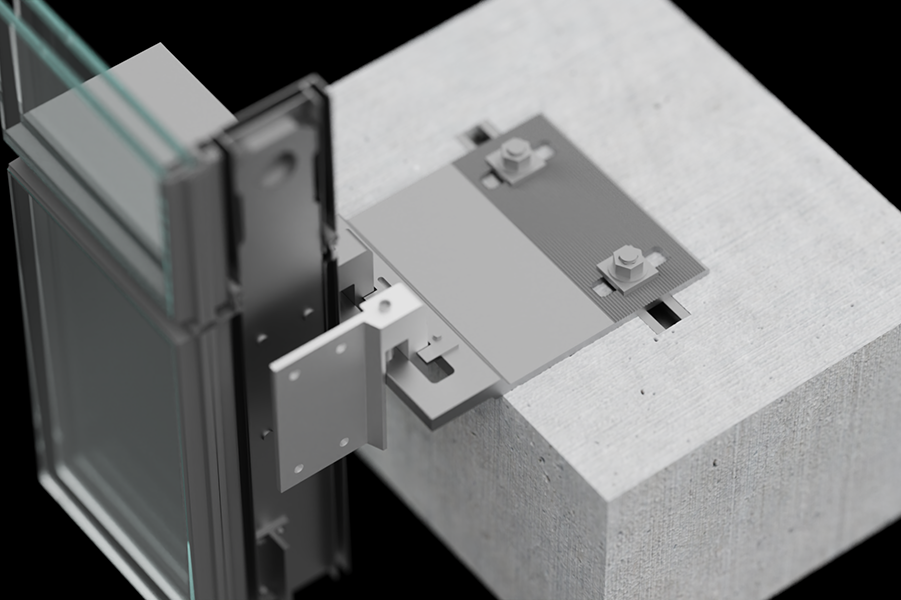
Facade Movement and Tolerances
Facade Movement
and Tolerances
Calculating Movements, Sizing Joints, and Managing Tolerances to Prevent Cracking, Leaking, and Failure
About This CPD
Every façade material moves. Clay expands, concrete shrinks, steel responds to temperature, and the structure deflects under load. This course provides architects and building design professionals with practical knowledge of movement accommodation and tolerance management – the discipline that keeps all of these behaviours from turning into cracking, leaking, or worse.
You’ll learn to calculate expected movements for common façade materials, determine joint widths and sealant specifications, and understand the critical interfaces where movement must be accommodated: floor-to-floor joints, corner details, material transitions, and connections to the primary structure. The course covers both the design principles and the reporting format expected by main contractors and checking engineers.
Presented by Eugene Korch (façade engineer and IAST Programme Director), the course uses real project tolerance reports and movement joint calculations to demonstrate how small coordination errors lead to cracking, sealant failure, water ingress, and panel distortion.
Through worked examples, joint design calculations, and tolerance schedules, this course equips you to produce robust movement and tolerance reports – and to understand the consequences when movement is underestimated or ignored.
This session covers:
Types of movement — thermal expansion, moisture movement, creep, dead and live load deflection, wind sway, seismic drift, differential settlement, and differential column shortening
Tolerances — manufacturing, structural, and installation tolerances, and how they stack in the worst direction
How different façade systems accommodate movement — stick curtain wall (pressure plate and toggle), unitised curtain wall, precast concrete, traditional masonry, rainscreen cladding, brick slips on rails, rendered systems, light steel framing, and double-skin facades
Dead load bracket positioning logic in rainscreen systems — why the fixed point location determines whether the top bracket has enough slot capacity for slab deflection
Joint design — sealant movement classes, joint width calculation, depth-to-width ratio, gasket compression range and compression set, open-jointed and baffled rainscreen joints, membrane detailing at movement joints
Connections — dead load brackets, restraint brackets, thermal breaks, three-axis adjustment, cast-in channels, serrated plates, slotted holes, and shim packs
What goes wrong — glass-to-frame contact, the Plywood Palace case study, unitised frame buckling, sealant failure, oil-canning, facade noise, masonry and render cracking, on-site improvisation
Design coordination — the movement and tolerances report, facade movement criteria, system selection against movement data, mock-up testing with racking
On site — pre-installation survey, tolerance stacking checks, joint sizing for combined movements, sealant specification by movement class, firestop coordination
Using worked examples and clear diagrams, this CPD focuses on the practical question: for every joint, every connection, and every panel — what is the worst combination of movement and tolerance, and have we designed for it?
What You’ll Learn
Identify the main types of movement affecting façade systems and understand which are reversible, which are irreversible, and how they combine
Calculate thermal movement for common façade materials using expansion coefficients and temperature ranges
Understand the difference between dead load deflection (already occurred) and future movements the façade must accommodate
Recognise tolerance stacking and check worst-case combinations before installation
Compare how stick curtain wall, unitised curtain wall, precast, masonry, rainscreen, and rendered systems accommodate movement
Size joints using sealant movement class and calculate required joint widths with safety margins
Distinguish between dead load brackets and restraint brackets and understand the role of each
Understand the dead load bracket positioning logic in rainscreen subframes
Recognise the thermal bridging impact of brackets and the trade-off between thermal performance and structural capacity
Identify common movement-related failures from their visible symptoms
Understand what the movement and tolerances report should contain and when it should be produced
Apply joint sizing and sealant selection principles on site
Who Should Attend
Architects, Architectural Technologists, Envelope Designers, Façade Specialist Contractors, Junior Façade Engineers, Building Envelope Consultants, Structural Engineers, Developers, Project Managers, Building Control Officers, Regulators, Cost Consultants, and Design Managers.
This session is designed for design professionals working on residential, commercial, and mixed-use developments where movement accommodation and tolerance coordination are critical to long-term façade performance.
Speakers
Eugene Korch
Programme Director, IAST
Eugene is a façade engineer and educator who leads educational initiatives through the Institute for Architectural Science and Technology (IAST) and Facade Intelligence, delivering training to construction professionals.
Join the Façade Intelligence Professional Membership (FI PRO) to access a comprehensive library of seminar recordings, a wide range of short courses developed by the Institute for Architectural Science and Technology (IAST), and regular case study releases.
We guarantee our members a minimum of 24 hours of structured, high-quality CPD content each year, allowing professionals to continuously develop their expertise in façade design and engineering.
FI PRO Membership provides individuals and teams with the flexibility to explore a wide variety of specialist courses without any additional course fees.
Individual Membership
Join FI PRO today to start accessing our full CPD library.
Corporate Membership
For organisations looking to support the development of their teams, explore our Corporate Membership options or contact us at corporate@iast.uk.
All technical CPD courses developed by the Institute for Architectural Science and Technology are free from advertising and commercial bias and are designed to promote best practices in façade design and engineering.
By joining FI PRO, you not only provide your team with engaging, relevant professional development opportunities, but also help support the continued development of the Façade Intelligence Knowledge Platform, contributing to higher standards of professional education across the construction industry.

Facade Access and Maintenance: Systems, Strategy and Compliance

Facade Access and Maintenance:
Systems, Strategy and Compliance
About This CPD
Façade access is often the last thing considered in design – and the first thing that causes problems in operation. This course addresses the full scope of access planning, from initial design-stage decisions through to 60-year maintenance strategy, covering BMU systems, abseil provisions, cradle installations, and ground-level reach solutions.
You’ll learn how access strategy shapes façade design from the earliest stages: roof-level plant zones, parapet details, tie-back anchor locations, and the implications of building geometry on cleaning and inspection reach. The course also addresses the practical coordination required between façade engineers, architects, and access specialists, alongside the health and safety obligations that apply to maintenance access design.
Presented by Eugene Korch (façade engineer and IAST Programme Director), the course draws on real project examples to demonstrate how early access planning prevents costly retrofit solutions and ensures that inspection, cleaning, component replacement, and sealant renewal remain feasible throughout the building’s service life.
Combining elevation studies, access zone diagrams, and maintenance schedule templates, this course is designed to help you integrate access strategy into the design process rather than treating it as an afterthought.
Join the Façade Intelligence Professional Membership (FI PRO) to access a comprehensive library of seminar recordings, a wide range of short courses developed by the Institute for Architectural Science and Technology (IAST), and regular case study releases.
We guarantee our members a minimum of 24 hours of structured, high-quality CPD content each year, allowing professionals to continuously develop their expertise in façade design and engineering.
FI PRO Membership provides individuals and teams with the flexibility to explore a wide variety of specialist courses without any additional course fees.
Individual Membership
Join FI PRO today to start accessing our full CPD library.
Corporate Membership
For organisations looking to support the development of their teams, explore our Corporate Membership options or contact us at corporate@iast.uk.
All technical CPD courses developed by the Institute for Architectural Science and Technology are free from advertising and commercial bias and are designed to promote best practices in façade design and engineering.
By joining FI PRO, you not only provide your team with engaging, relevant professional development opportunities, but also help support the continued development of the Façade Intelligence Knowledge Platform, contributing to higher standards of professional education across the construction industry.

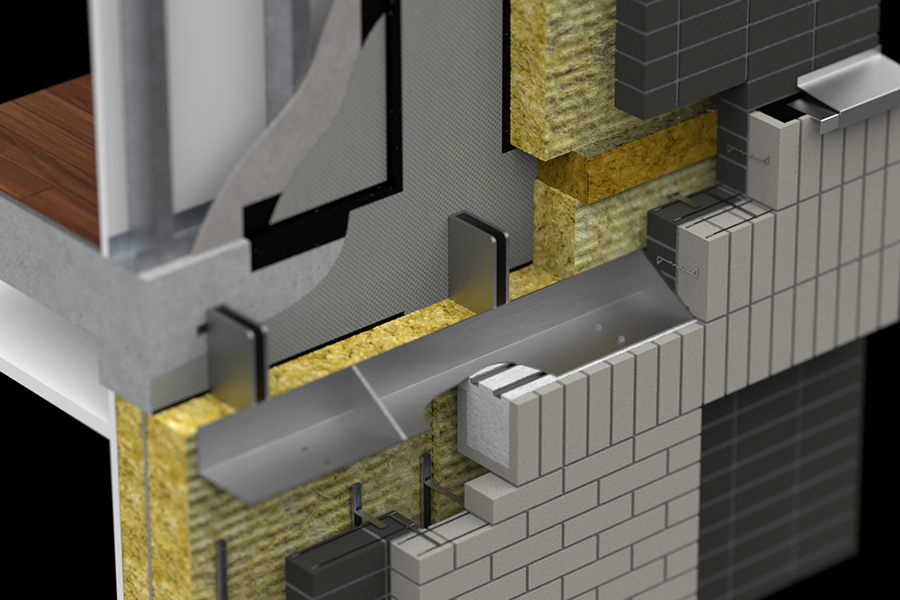
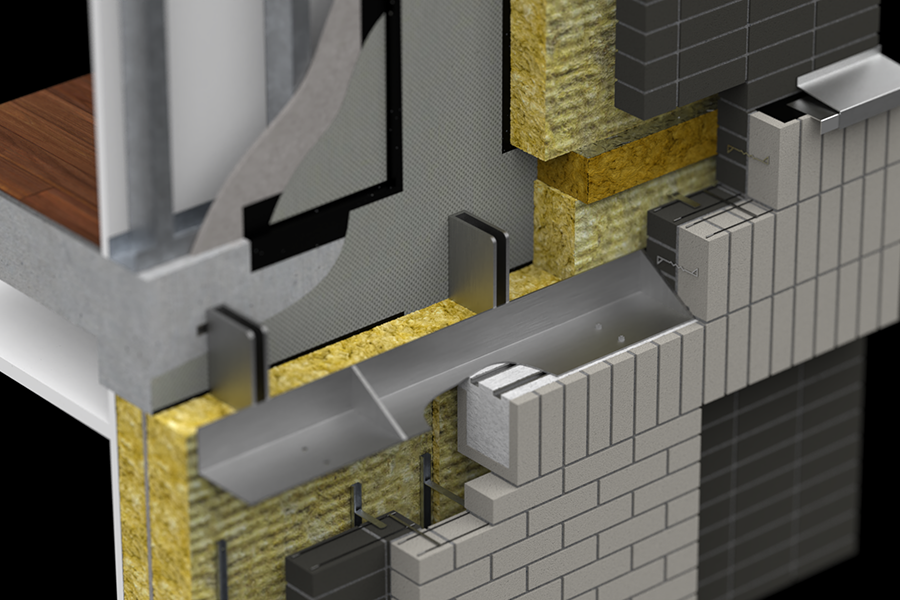
The Brick Facade Spectrum: Brickslips, Precast, Render and Facing Brick

The Brick Facade Spectrum:
Brickslips, Precast, Render and
Facing Brick
About This CPD
This comprehensive technical CPD course provides architects and building design professionals with practical knowledge of masonry-like cladding systems. The course covers traditional supported masonry, mechanically-fixed brick slip systems, adhesive-fixed systems, insulated prefab panels, rendered brick-effect finishes, and precast concrete solutions – examining up to ten distinct ways to achieve a brick façade appearance.
You’ll learn to compare systems across key performance criteria: self-weight, fire classification, installation speed, programme impact, cost, and long-term durability. The course explains the critical differences between mechanical retention and adhesive-only bonding, addresses fire classification requirements and height restrictions that govern system selection, and examines documented cases of adhesive de-bonding and slip detachment to illustrate how specification decisions carry long-term consequences.
Presented by Eugene Korch (façade engineer and IAST Programme Director), the course combines regulatory context with practical application, using side-by-side system comparisons, certification data, and project case studies to show how each system performs in practice.
Using clear diagrams, technical data sheets, and manufacturer specifications, this course builds evidence-based understanding. It’s designed to help you specify appropriate masonry-like cladding systems whilst recognising the common pitfalls, design errors, and specification gaps that lead to failures on site.
Join the Façade Intelligence Professional Membership (FI PRO) to access a comprehensive library of seminar recordings, a wide range of short courses developed by the Institute for Architectural Science and Technology (IAST), and regular case study releases.
We guarantee our members a minimum of 24 hours of structured, high-quality CPD content each year, allowing professionals to continuously develop their expertise in façade design and engineering.
FI PRO Membership provides individuals and teams with the flexibility to explore a wide variety of specialist courses without any additional course fees.
Individual Membership
Join FI PRO today to start accessing our full CPD library.
Corporate Membership
For organisations looking to support the development of their teams, explore our Corporate Membership options or contact us at corporate@iast.uk.
All technical CPD courses developed by the Institute for Architectural Science and Technology are free from advertising and commercial bias and are designed to promote best practices in façade design and engineering.
By joining FI PRO, you not only provide your team with engaging, relevant professional development opportunities, but also help support the continued development of the Façade Intelligence Knowledge Platform, contributing to higher standards of professional education across the construction industry.

Balconies and Terraces – Design Principles

Balconies and Terraces – Design Principles
Understanding UK Requirements for Safety, Drainage, Fire Performance, and Integration
About This CPD
Join us for a comprehensive technical CPD on balcony and terrace design in the UK. This session provides practical guidance on safety, drainage, fire performance, thermal bridges, wind effects, and acoustic considerations.
Presented by Eugene Korch (IAST), this webinar demystifies the complex interplay between multiple performance requirements, helping design professionals understand how to specify compliant balconies whilst navigating the areas where interpretation and engineering judgement remain necessary.
This session covers:
Key definitions – distinguishing balconies, terraces, enclosed balconies, and non-balcony building projections
Safety requirements – guarding height (1,100mm rule), 100mm sphere test for preventing objects falling through, toe holds, slip resistance (PTV requirements), threshold heights, structural strength and deflection limits, imperforate soffits to prevent water discharge onto balconies below
Drainage design – one of the most critical aspects. Understanding drainage strategies: edge drainage vs piped drainage systems, key dimensional requirements and water management hierarchy
The 2,500mm edge drainage limit – absolute maximum depth for edge-drained balconies
Fire safety – material requirements for residential buildings, balcony-to-building connections and fire barriers
Thermal bridges – quantifying heat loss through balcony connections and mitigation strategies
Wind effects – vulnerable locations and mitigation measures
Integration challenges – understanding how decisions in one area affect other performance requirements
Common design errors – and how to avoid them
Using simplified diagrams, real-world examples, this CPD focuses on practical application. We'll explore not just what standards require, but also the areas where standards leave room for interpretation – helping you understand both the explicit requirements and where professional judgement is required.
What You'll Learn
Distinguish between balconies, terraces, enclosed balconies, and building projections that are not balconies
Understand basic structural requirements for balcony design
Apply core safety principles for fall prevention
Understand guarding height requirements
Apply fire safety requirements for residential buildings
Implement the 100mm sphere rule for preventing objects falling through
Design for slip resistance on balcony surfaces
Recognize wind-vulnerable balcony locations and apply mitigation measures
Design drainage systems using edge or piped drainage methods appropriately
Understand critical water ingress prevention: threshold height, warning pipe position, water collection levels
Apply the 2,500mm maximum depth limitation for edge drainage
Understand optimal balcony arrangement patterns on building facades for acoustic and environmental performance
Identify and mitigate thermal bridges at balcony connections
Understand how balconies affect acoustic performance
Integrate multiple technical requirements in balcony specifications
Identify and avoid common design errors
Who Should Attend
Architects, Architectural Technologists, Envelope Designers, Façade Specialist Contractors, Junior Façade Engineers, Building Envelope Consultants, Structural Engineers, Developers, Project Managers, Building Control Officers, Regulators, Cost Consultants, and Planning Consultants.
This session is designed for design professionals working on residential or mixed-use developments with balconies and terraces, particularly those navigating the complexities of medium and high-rise construction, but who may not have specialist acoustic engineering, structural, fire safety, or other specific technical backgrounds.
Speakers
Eugene Korch
Programme Director, IAST
Eugene is a façade engineer and educator who leads educational initiatives through the Institute for Architectural Science and Technology (IAST) and Facade Intelligence, delivering training to construction professionals.
Event Details
Format: Live online webinar with interactive polls
Duration: 45 minutes + Q&A
CPD Points: 2 hours structured CPD / 2 Learning Units
Certificate: CPD certificate provided upon completion
Recording: Available on demand to members only
Route to Chartership in Architectural Technology via DipFDE Qualification and MCIAT Professional Assessment: Facade Design Pathway
Route to Chartership in Architectural Technology via DipFDE Qualification and MCIAT Professional Assessment: Facade Design Pathway
Opportunity to further enhance your competence in facades as a Chartered professional with CIAT and IAST
CIAT and IAST are pleased to announce that members with a Level 5 Diploma in Facade Design and Engineering (DipFDE) are eligible to join CIAT as either an Associate (ACIAT) member or CIAT Affiliate and then progress to qualify as a Chartered Architectural Technologist (MCIAT) via the MCIAT Professional Assessment qualification route and the Façade Design pathway. Becoming a Chartered professional offers globally recognised professional status that demonstrates your commitment to the highest ethical and technical standards in the field.
Learn more about routes to Chartership with CIAT:
The Level 5 DipFDE is an online qualification programme tailored for busy professionals who want to build applicable knowledge and demonstrate competence in façade design and engineering. The course combines video lessons, knowledge tests, interactive 3D details, case studies, and live online tutorials, providing a comprehensive, engaging and practice-focused learning experience.
The IAST offers learning options that may be of interest to CIAT members and affiliates who wish to develop and/or further enhance their knowledge in façade design and engineering. Learn More about the Level 5 Diploma in Facade Design and Engineering (DipFDE) Qualification Programme.
https://www.iast.uk/courses/level5-dipfde
If you are interested in finding out more, please register your interest to join a dual badged CIAT and IAST webinar on 26th of February 2026, which will cover CIAT joining and qualifying routes, along with the key benefits of the DipFDE Programme.
The session will be hosted by James Banks, Head of Membership, Chartered Institute of Architectural Technologists (CIAT) (j.banks@ciat.global) and Eugene Korch, Facade Design and Engineering Programme Director from the Institute for Architectural Science and Technology (IAST). For DipFDE enrolment-related queries, please contact info@iast.uk.
Join the webinar to learn more and ask your questions directly during the live Q&A.
Register to attend the live online event!

Acoustic Glass Performance Fundamentals
Acoustic Glass Performance Fundamentals
An Introduction to Glass Specifications and Acoustic Performance Metrics

About This CPD
Join us for an introductory technical CPD on acoustic glass performance. This session provides the foundation for understanding glass specifications and how they relate to sound insulation in building envelopes.
Presented by Eugene Korch (IAST) and Marc Fuzellier (Atelier Crescendo), this webinar demystifies the terminology and metrics used in acoustic glass specifications, helping design professionals understand the fundamentals before engaging with specialist consultants or manufacturers.
This introductory session covers:
Reading glazing unit formulas – understanding glass types, thicknesses, spacers, gas fills, and laminated construction
Sound fundamentals – frequency ranges, sound intensity, and real-world noise sources
Acoustic metrics – Rw values, spectrum adaptation terms (C and Ctr), and their applications
Design parameters – mass, asymmetry, cavity tuning, and laminated interlayers
Common misconceptions – clarifying which parameters affect acoustic performance and which don't
Using simplified diagrams and conceptual explanations, this CPD focuses on building foundational knowledge. This is an introductory session – it provides the vocabulary and framework you'll need when working with acoustic consultants and reviewing manufacturer specifications.
What You'll Learn
Interpret glazing unit specifications and understand each component's role
Differentiate between annealed, toughened, and heat-strengthened glass
Understand different interlayer types and their roles in acoustic performance
Recognize how spacer types, cavity widths, and gas fills relate to performance
Identify sound frequencies and their real-world sources
Understand Rw, C, and Ctr values and when each is relevant
Recognize which glass parameters impact acoustic performance, and which common assumptions are incorrect
Who Should Attend
Architects, Architectural Technologists, Envelope Designers, Façade Specialist Contractors, Junior Façade Engineers, Building Envelope Consultants, Structural Engineers, Developers, Project Managers, Building Control Officers, Regulators, and Cost Consultants.
This session is designed for design professionals who need foundational knowledge of acoustic glass terminology and metrics, particularly those who work with acoustic consultants or review glass specifications but may not have specialist acoustic engineering backgrounds.
Speakers
Eugene Korch
Programme Director, IAST
Eugene is a façade engineer and educator who leads educational initiatives through the Institute for Architectural Science and Technology (IAST) https://www.iast.uk and Facade Intelligence, delivering training to construction professionals.
Marc Fuzellier
Acoustic Consultant, Director at Atelier Crescendo
Marc founded Atelier Crescendo https://ateliercrescendo.ac/ in 2020 after gaining experience in reputable independent and multi-disciplinary consultancies (including WSP), in a variety of fields such as architectural acoustics, environmental noise, building services noise and vibration.
Over his career, Marc has worked on a broad range of projects from small-scale developments to large-scale international projects. He is a full member of the Institute of Acoustics, a member of the Audio Engineering Society, and a member of the Société Française d'Acoustique.
Event Details
Format: Live online webinar with interactive polls
Duration: 45 minutes + Q&A
CPD Points: 2 hours structured CPD / 2 Learning Units
Certificate: CPD certificate provided upon completion
Recording: Available on demand to members only
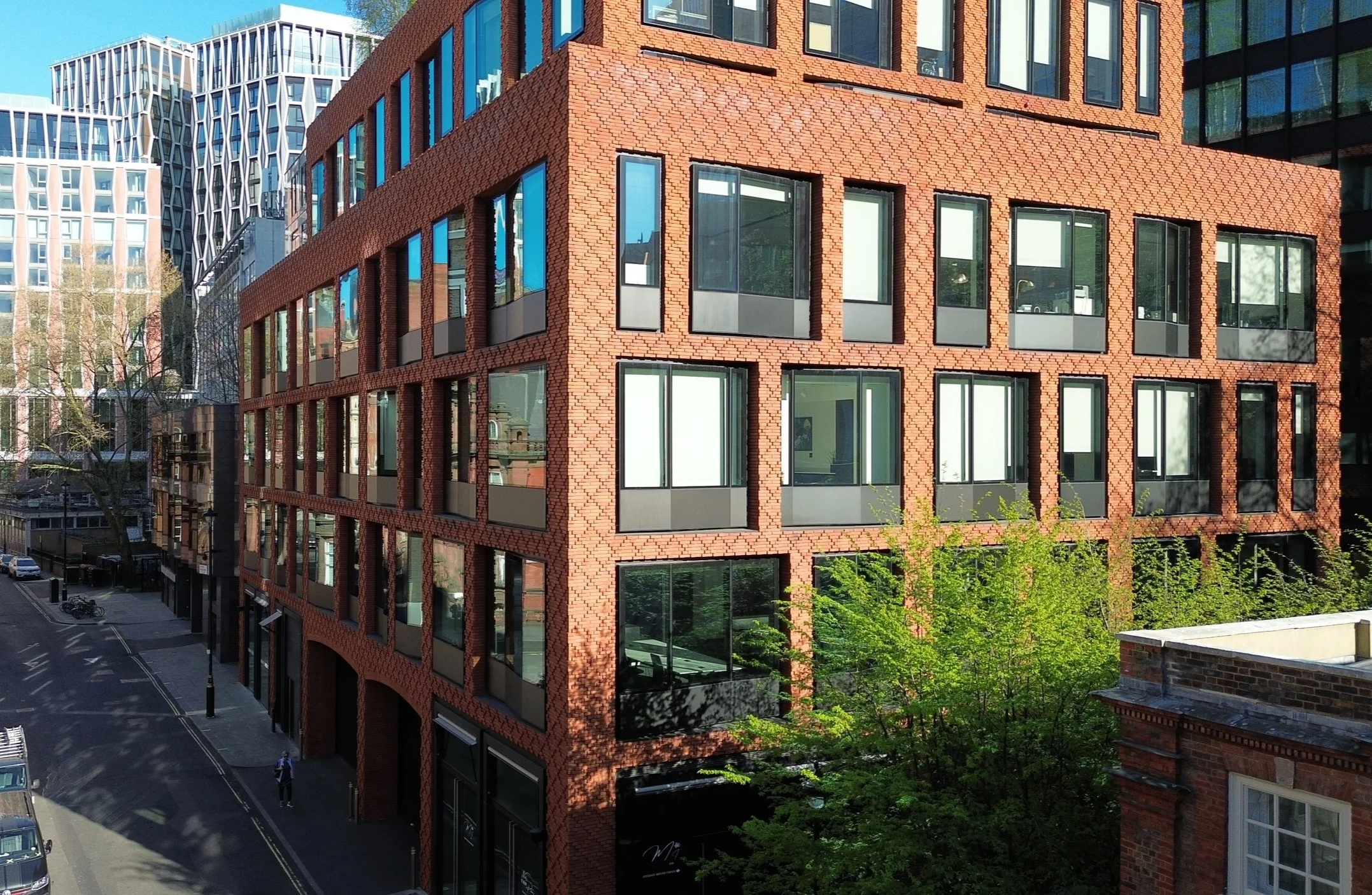
Brick Slips vs Precast
Brick Slips vs Precast: Modern Brick Finish Façades
Case-study-based Online CPD Seminar
Brick façades are everywhere in contemporary architecture—but very few are constructed as traditional masonry.
In dense urban environments, external access is restricted, storage is limited, and scaffolding is often unfeasible.
This raises a fundamental question: how do you deliver a high-quality brick façade when conventional brickwork simply cannot be used?
This live CPD examines a London-based case study that pushed the limits of modern brick façade engineering.
The façade features unusual brick bonding, extremely slender piers and ledges, and a requirement for visually continuous brickwork without visible movement joints—conditions in which standard bricklaying becomes impossible.
We will compare two modern solutions for achieving brick finishes under these constraints:
Precast concrete façades with cast-in brick
Rainscreen systems using brickslips
Using the case study as a framework, we will explore how each system responds to the critical challenges of contemporary façade design.
Rather than focusing on appearance alone, we look at the practical engineering decisions that drive system choice:
Access and installation methods
Water management and moisture pathways
Logistics, sequencing, and programme impact
Movement joints and continuity of brick bond
Integration of windows and openings
Fire safety strategies and cavity behaviour
By the end of the session, attendees will understand not only how these façade systems work, but also why they are selected—and the technical trade-offs involved.
Who Should Attend:
Architects & Architectural Technologists
Façade Engineers & Building Envelope Consultants
Structural Engineers
Developers & Project Managers
Building Control & Regulators
Cost Consultants & Manufacturers
Format:
Live Online CPD
45 minutes + 15 minutes Q&A + knowledge-check multiple choice
All attendees receive:
1-hour CPD certificate upon completion of the knowledge check
Access to the event recording (members only)
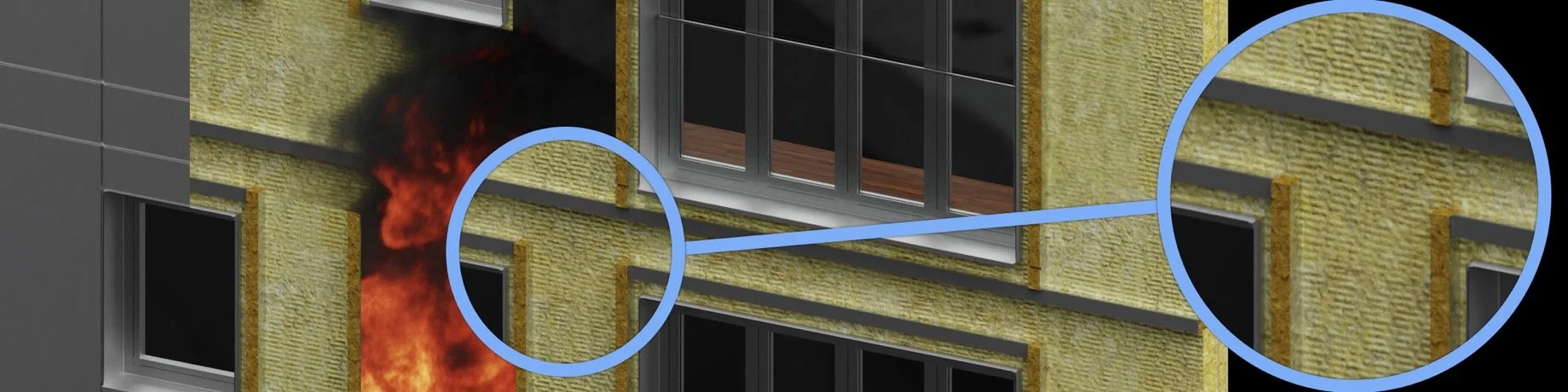
Cold Smoke Propagation Open State Cavity barriers
The Building Safety Regulator has raised concerns over the use of open state cavity barriers around windows at Gateway 2. Join this member-only Facade Intelligence event to learn how to demonstrate compliance without compromising drainage and ventilation.

Spandrel Zones in Façade Design and Engineering - Online CPD Seminar
Learn about design considerations for spandrel zones, explore façade fire safety, and review key norms and standards in the UK and internationally. This online CPD seminar is essential for architects, façade engineers, design managers, fire engineers and building safety professionals.

Rainwater Control in Façade Design and Engineering - Online CPD Seminar
Effective rainwater control is one of the most critical principles in façade design—and this seminar brings you the latest insights, strategies, and applied knowledge from leading experts Dr John Straube (University of Waterloo) and Eugene Korch (Institute for Architectural Science and Technology).
