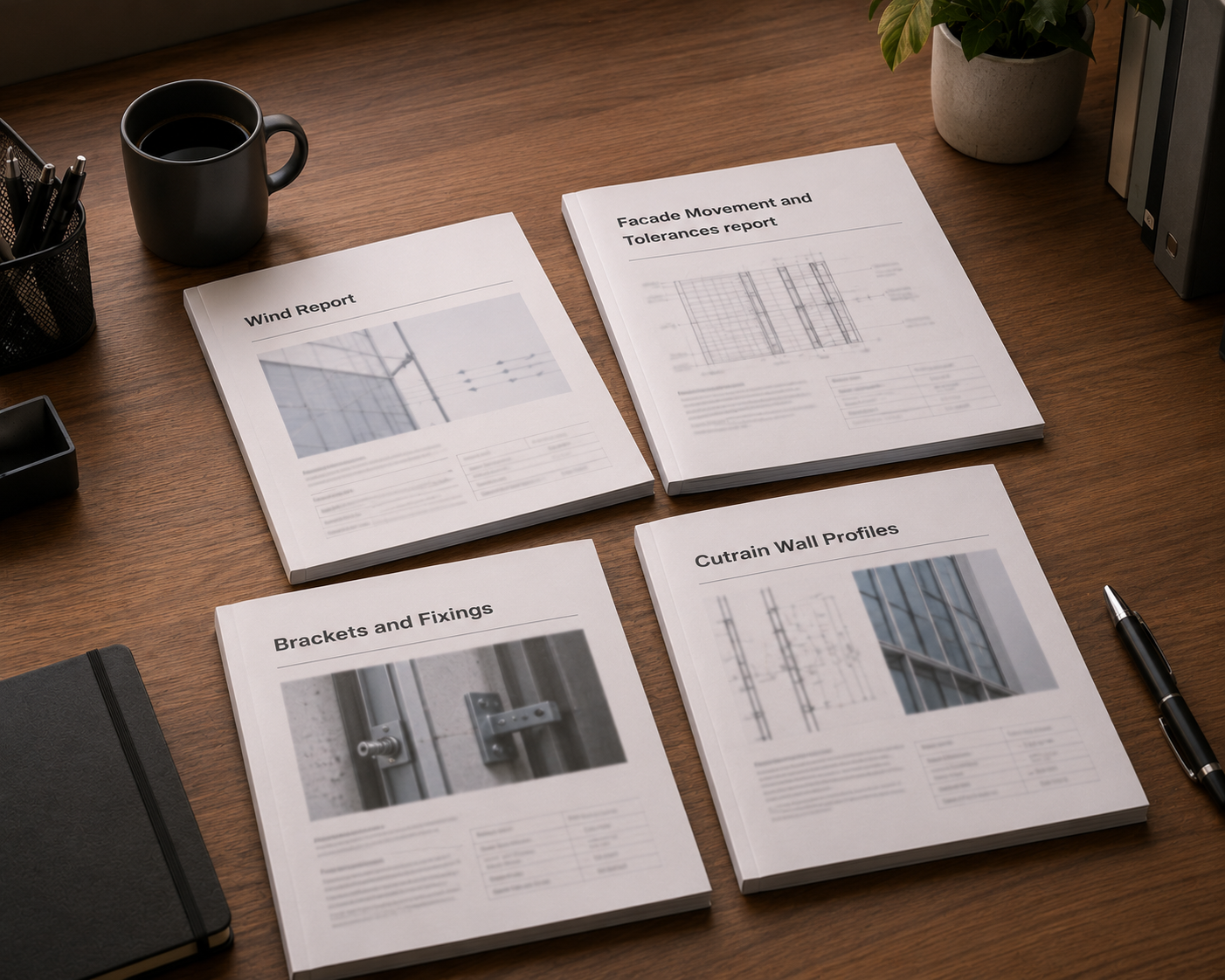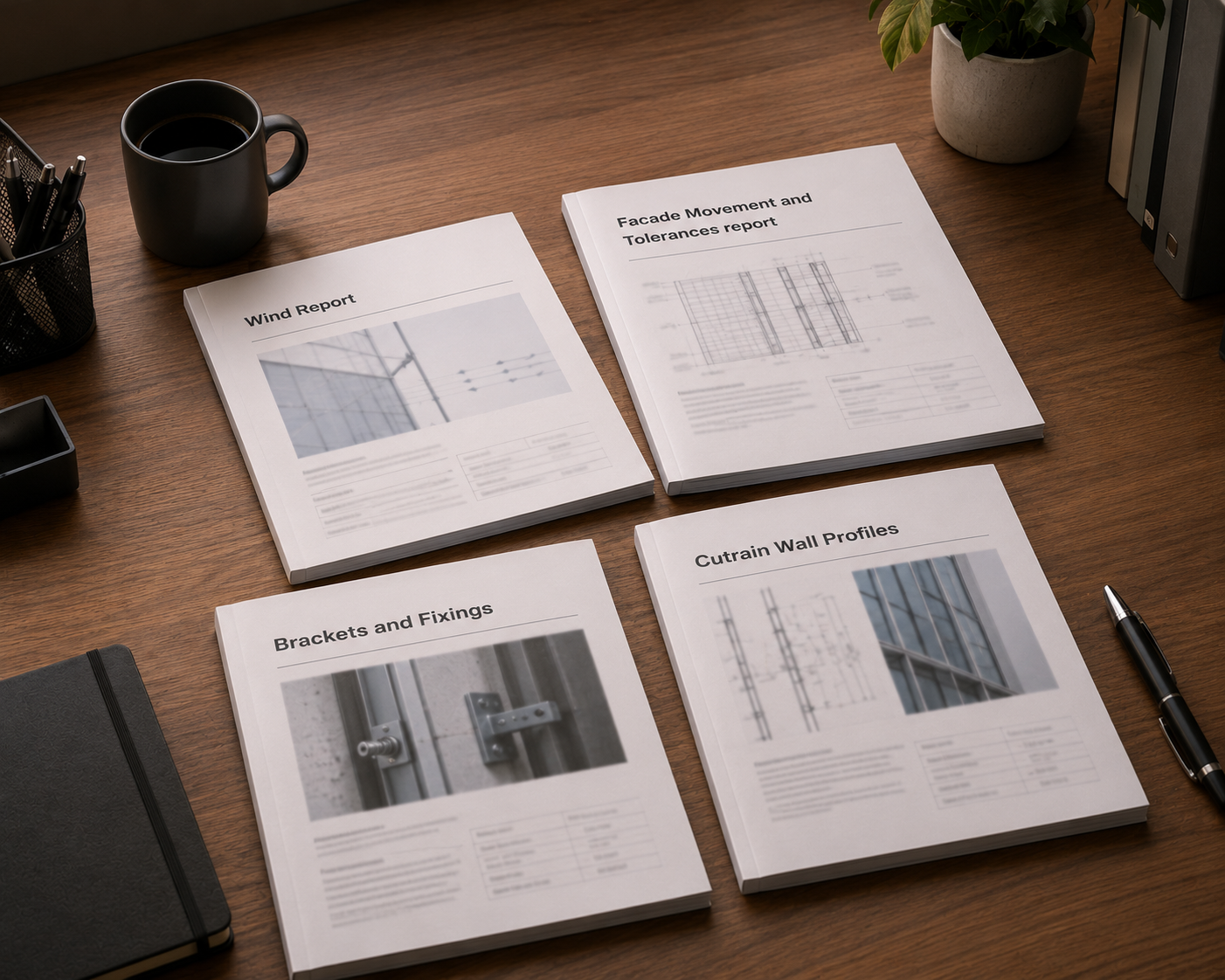
MC026-09 - Reports preparation General requirements
Enrolment will open soon
How Facade Calculation Reports Are Written, Reviewed, and Trusted — Traceability, Conclusions, and Limits of Applicability for Every Report Type
About This CPD
Every calculation in facade engineering ends as a report — the only part of the work anyone else ever sees. This practical technical CPD covers how facade calculation reports are written so they can be reviewed and reviewed so they can be trusted: traceability, findable conclusions, limits of applicability, and the specific anatomy of the wind, bracket, profile, glass, and movement reports.
Presented by Eugene Korch (IAST), the course names the errors that actually slip through — the quiet mismatch, the ambiguous bracket description — and the defences that catch them.
This course covers:
What a report is for — answering the question the next stage needs, and being checkable by someone who was not there
How review works — tracing the reasoning from inputs to result, not re-running the analysis
The three principles — traceability, a findable conclusion, and limits of applicability
The wind report — the load map and the chain from location to pressure
The bracket report — the schedule, the anchor parameters, and the ambiguous description that puts the wrong bracket on the building
The profile report — governing checks and the profile references per zone
The glass report — the specification table the manufacturer acts on, with the climatic assumptions stated
The movement and tolerance report — the deliverable that changes with the task, and the scope agreed up front
The errors that slip through — quiet mismatches, and the independent checks that catch them
Hand versus software calculations, office templates, and the pre-issue checklist
Written for both sides of the desk, this CPD focuses on the practical goal: reports that answer the project's question, pass review the first time, and can be trusted by someone who was not there when the work was done.
What You'll Learn
Write reports with traceable numbers, findable conclusions, and stated limits
Structure each report type around what its reader needs
Describe bracket types so the right bracket lands in the right place
Review a report by tracing rather than re-running
Check inputs and output schedules independently of the calculation
Present hand and software calculations so each earns trust
Run the pre-issue checklist before any report leaves the office
Target Audience
This course is designed for design professionals who write, review, or rely on facade calculation reports on residential, commercial, and mixed-use developments.
This Short Course is designed for:
Architects
Architectural Technologists
Envelope Designers
Facade Specialist Contractors
Junior Facade Engineers
Building Envelope Consultants
Structural Engineers
Developers
Project Managers
Building Control Officers
Regulators
Cost Consultants
Design Managers
Speaker

Eugene Korch
Programme Director, IASTEugene is a facade engineer and educator who leads educational initiatives through the Institute for Architectural Science and Technology (IAST) and Facade Intelligence, delivering training to construction professionals.
Course Details
Format: On-demand video course
Duration: Approximately 1.5 hours
CPD Points: 1.5 hours structured CPD / 1 Learning Unit
Certificate: CPD certificate provided upon completion
Access: Available on demand to members
MC026-09
Reports preparation General requirements
Every facade calculation ends as a report — the only part of the work anyone else ever sees. Nobody reads your model; they read your document. This course covers how facade calculation reports are written so they can be reviewed, and reviewed so they can be trusted.
Course Fee £120
Free for FI Pro Members