MC024-7.2 Thermal Analysis of Multi-Layered Walls: Calculation and Compliance
From Layer Terminology to Regulatory Documentation — A Complete Practical Framework
About This CPD
Join us for a comprehensive technical CPD on thermal analysis of external wall assemblies. This session builds the complete calculation chain from scratch — starting with what a wall actually is, layer by layer, and ending with a result you can trust, submit, and defend.
Presented by Eugene Korch (IAST) and [CO-PRESENTER NAME TBC], this webinar cuts through the confusion around U-values, R-values, surface resistances, and cavity classification — and shows exactly where each calculation method works and where it breaks down.
This course covers:
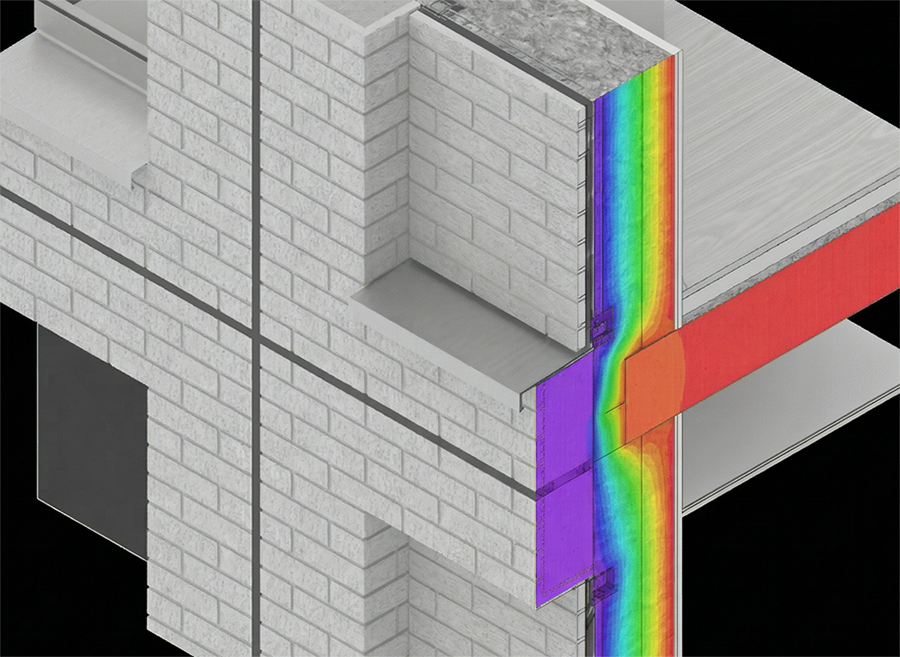
Wall construction — layer sequence from internal finish to outer cladding, homogeneous vs non-homogeneous layers, thermal bridges in steel and timber frames
Key terminology — thermal conductivity (λ), thermal resistance (R), thermal transmittance (U), total thermal resistance (R-total): what each describes and why mixing them up breaks the calculation
Surface resistances — why Rsi and Rse exist, how direction of heat flow changes their values, and where they sit in the formula
Cavity classification — unventilated, slightly ventilated, and well-ventilated: how one classification decision shifts the entire thermal model
Thermal boundary — why in a rainscreen system it sits at the outer face of the insulation, not at the outer face of the building, and what that means for the cladding
Calculation methods — manual calculation, simple online calculators, and advanced professional tools: scope, limitations, and when to move from one to the next
Bracket correction — why a wall that passes the plane calculation may still fail once fixings are accounted for
Compliance — regulatory targets, safety margins, and the four levers for improving a non-compliant wall — in order of effectiveness
Documentation — what every regulatory calculation report must contain to allow independent verification
Built vs calculated performance — why the wall on site always performs worse than the wall in the calculation, and what the plane calculation cannot see
Using examples drawn from real construction types and international building codes, this CPD focuses on practical understanding. Not just how to get a number — but what the number means, whether to trust it, and how to document it.
What You'll Learn
Identify every layer in a multi-layered wall and explain its thermal function
Distinguish between thermal conductivity (λ), thermal resistance (R), and thermal transmittance (U) — and apply each correctly
Select the correct surface resistance values for walls, roofs, and floors
Classify an air cavity correctly and understand how that classification changes the calculation
Perform a manual U-value / R-total calculation for a homogeneous multi-layered wall
Use a simple online calculator accurately — and recognise when it is no longer appropriate
Use an advanced professional calculator for rainscreen facades with bracket correction
Identify the four levers for improving a non-compliant wall and apply them in the right order
Recognise why built performance always falls short of the calculated result, and how to design for it
Produce a calculation document that meets regulatory submission requirements
Target Audience
This session is designed for design professionals who need to understand, produce, or review thermal calculations for external wall assemblies — particularly those working across multiple markets with different regulatory frameworks.
This Short Course is designed for:
Architects,
Architectural Technologists
Envelope Designers
Facade Specialist Contractors
Junior Facade Engineers
Building Envelope Consultants
Structural Engineers
Developers
Project Managers
Building Control Officers
Regulators
Cost Consultants
Design Managers
Speaker

Eugene Korch
Programme Director, IASTEugene is a facade engineer and educator who leads educational initiatives through the Institute for Architectural Science and Technology (IAST) and Facade Intelligence, delivering training to construction professionals.
Course Details
Format: Online
CPD Points: 2 hours structured CPD / 2 Learning Units
Certificate: CPD certificate provided upon completion
MC024-7.2
Thermal Analysis of Multi-Layered Walls: Calculation and Compliance
The course covers the principles of steady-state heat transfer, thermal resistance of individual layers, surface resistances, and the combined U-value methodology used in international and European practice.
Course Fee £120
Free for FI Pro Members